

I’d choose paper for a thin, flexible bookmark and resin for a rigid, glossy keepsake. Paper takes about 5–10 minutes to assemble; resin takes more hands-on time and may need 48 hours or longer to cure, depending on the product.
For either option, I’d start with fully dried flowers, choosing and preparing flowers carefully, avoid bulky overlaps, and keep edges smooth. A bookmark should hold your place - not force pages apart.
Quick Comparison
| Feature | Paper/cardstock | Cast resin |
|---|---|---|
| Feel and thickness | Thin and flexible; added layers increase bulk | Rigid; thickness depends on mold and fill |
| Supplies | Cardstock, acid-free glue, sealer or laminate | Resin, slim mold, protective equipment, and mixing tools or compatible UV lamp |
| Hands-on time | About 5–10 minutes | About 10–20 minutes |
| Drying or curing | About 20–30 minutes between coats; longer if still damp | Product-dependent; two-part resin may need 48 hours or longer |
| Wear and finish | Can crease; matte or glossy | Moisture-resistant and usually glossy; can scratch or crack |
| Best fit | Everyday reading and batch gifts | Glossy gifts and display pieces |
My final check: <u>fully dry or cured, flat, and free of sticky spots or rough edges</u>. For resin, I’d also follow the label’s glove, eye protection, and ventilation instructions - and test one finished bookmark before making a batch.
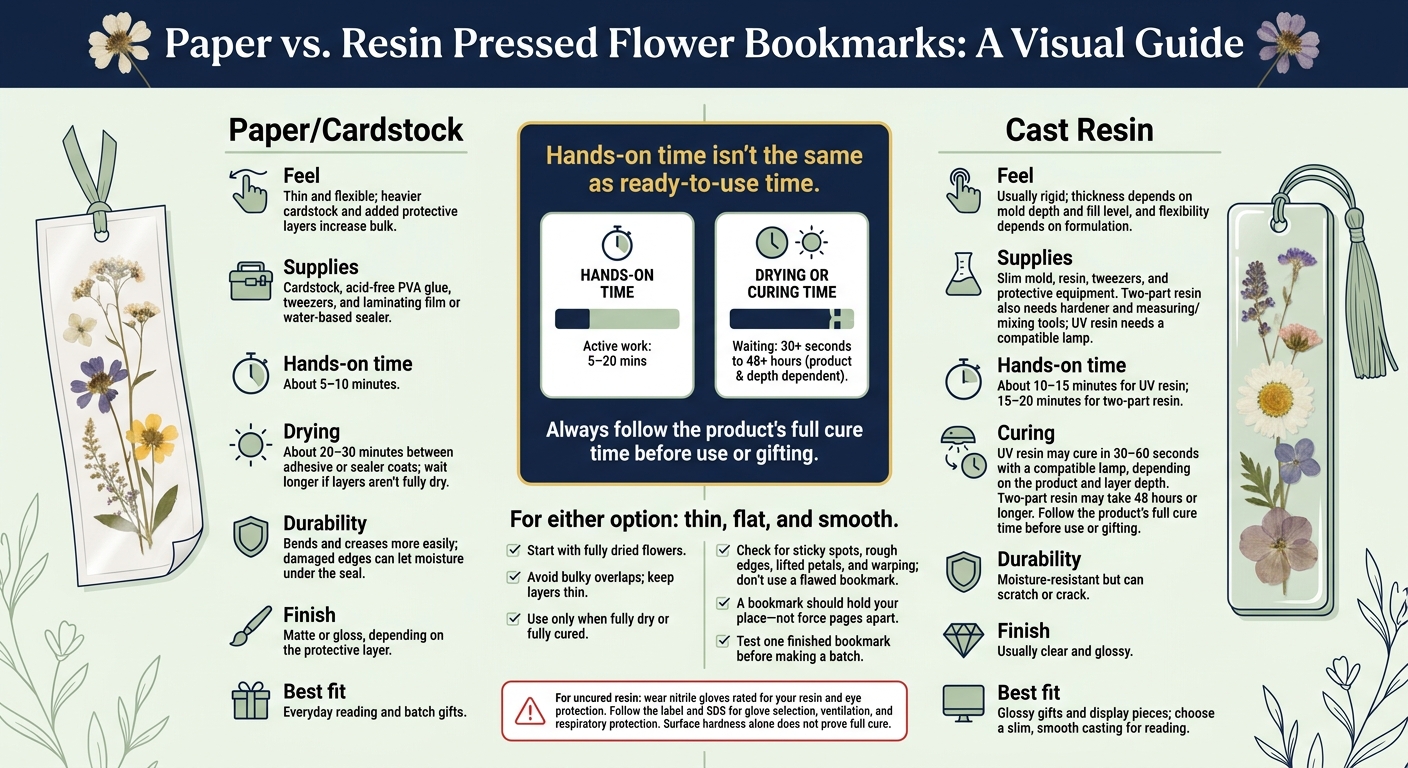
Pressed Flower Bookmarks: Paper vs. Resin
Turn Flowers Into a Bookmark With This Simple Trick!
sbb-itb-80d8183
Paper vs. Resin: Supplies, Time, and Durability
Hands-on time isn’t the same as ready-to-use time. Adhesive needs time to dry, and resin needs time to cure.
| Feature | Paper/cardstock | Cast resin |
|---|---|---|
| Thickness | Thin; cardstock and protective layers add bulk | Mold depth and fill level determine thickness |
| Flexibility | Flexible, though heavier cardstock is harder to bend | Usually rigid; results depend on the formulation |
| Supplies | Cardstock, acid-free PVA glue, tweezers, and laminating film or water-based sealer | Slim mold, resin, tweezers, and protective equipment; two-part resin also needs mixing tools and hardener, while UV resin needs a compatible lamp |
| Hands-on time | About 5–10 minutes | About 10–15 minutes for UV resin; 15–20 minutes for two-part resin |
| Drying or curing | Allow about 20–30 minutes between adhesive or sealer coats; wait longer if layers aren’t fully dry | UV resin may cure in 30–60 seconds with a compatible lamp, depending on the product and layer depth; two-part resin may take 48 hours or longer |
| Durability | Bends and creases more easily | Resists moisture but can scratch or crack |
| Finish | Matte or gloss, depending on the protective layer | Usually clear and glossy |
These differences affect how thin and smooth your bookmark feels between pages.
Paper: Thin, Flexible, and Easy to Assemble
Dry-fit your flower arrangement before gluing. Then mount fully dried flowers on acid-free cardstock with a small amount of acid-free PVA glue. Have tweezers and either laminating film or a water-based sealer ready, and let each adhesive coat dry before sealing.
Keep the layers light to limit bulk. Heavier cardstock, overlapping flowers, and extra protective layers all make the bookmark thicker. Damaged edges can let moisture under the seal, and torn paper is hard to repair.
Resin: Glossy, Rigid, and Moisture-Resistant
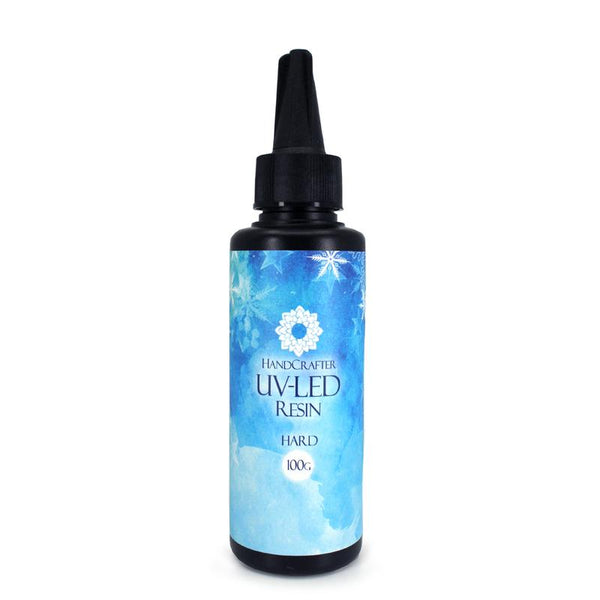
Enclose completely dry flowers in thin resin layers in a slim mold. Work with ventilation and use tweezers. Two-part resin also requires measuring tools, while UV resin needs a compatible lamp. This process is similar to making pressed flower resin keychains.
Keep two-part resin level and free of dust as it cures. UV resin can cure quickly, but exposure time depends on the product and layer depth. Let the resin cure fully before placing the bookmark in a book.
Best Uses for Each Bookmark
| Use | Paper | Resin |
|---|---|---|
| Everyday reading | Suits readers who want less bulk and more flexibility | Choose a slim, smooth bookmark |
| Gifting | Simple to make in batches | Suits a glossy keepsake |
| Display | Matte or gloss finish | Clear, glossy finish |
| Flower protection | Protective layers help keep petals from lifting | Encloses flowers in a moisture-resistant shell |
For reading, choose flexible paper or a slim resin casting with smooth edges. Neither should force the pages apart. When making batches, set aside flat drying space for paper and level, dust-protected curing space for resin.
How to Make Paper and Resin Bookmarks
Focus on thin layers and smooth edges at every step.
Press and Dry the Flowers
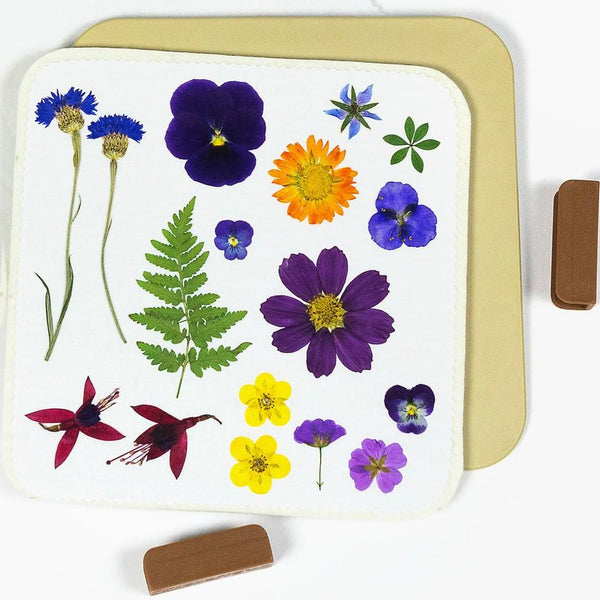
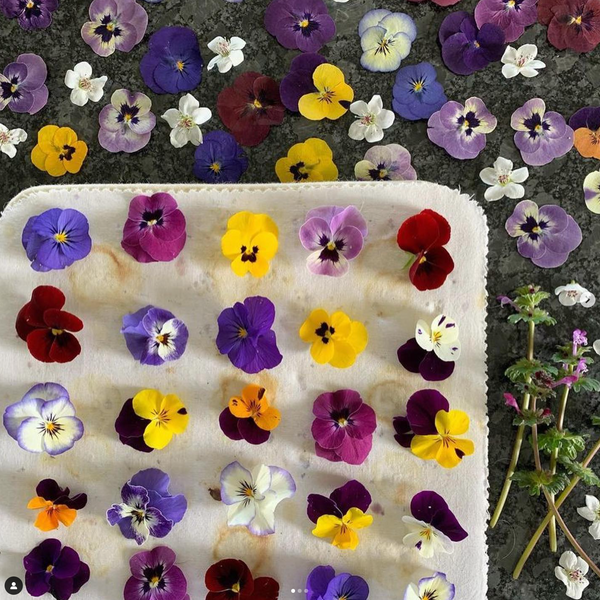
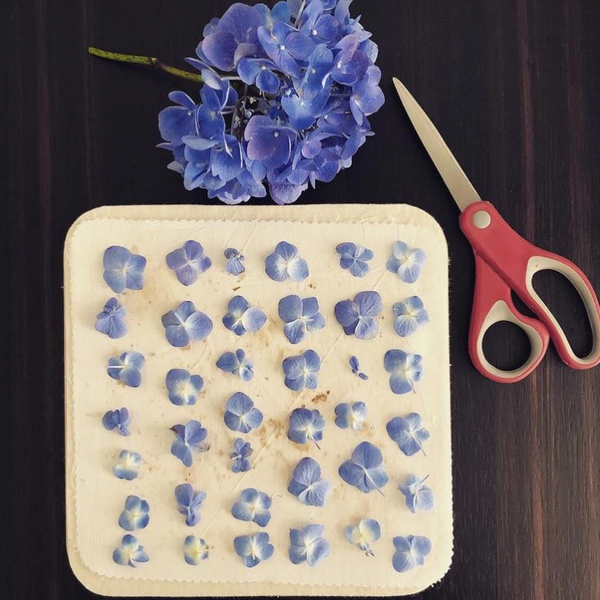
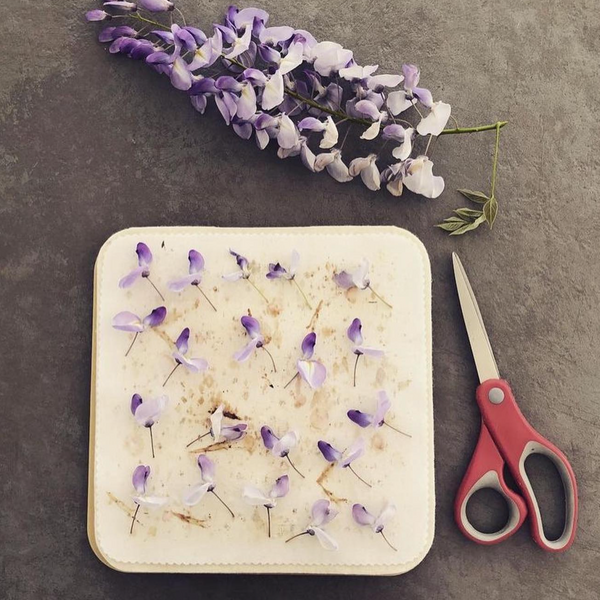
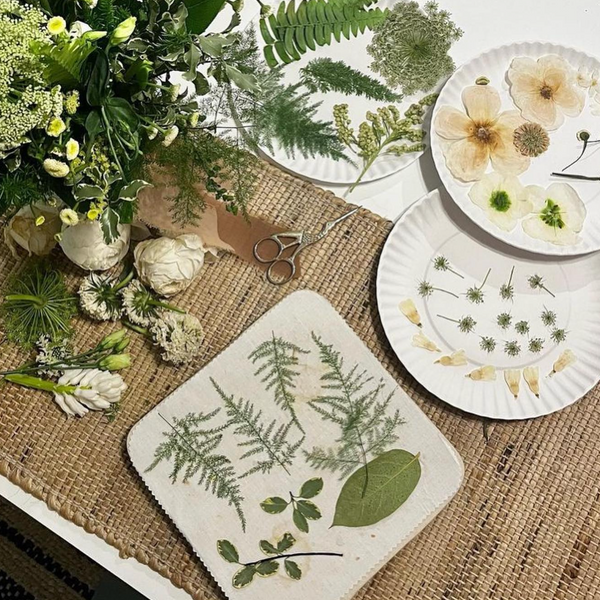
Choose flat petals, small blooms, and fine foliage. Skip thick flower centers that add bulk, and make sure the flowers are fully dry before using them.
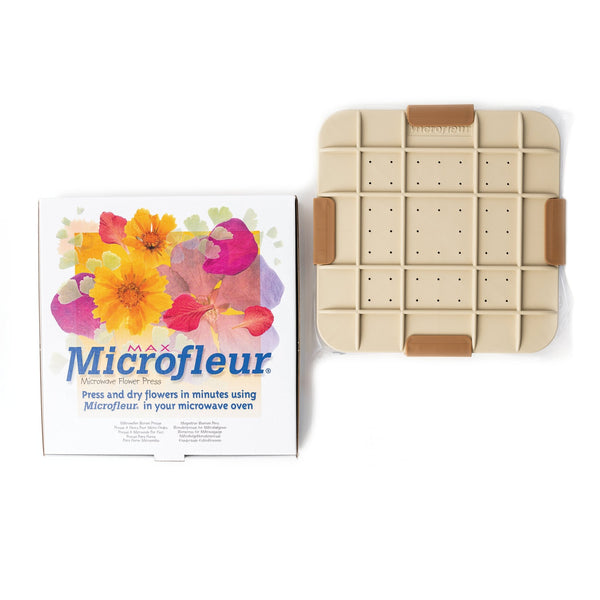
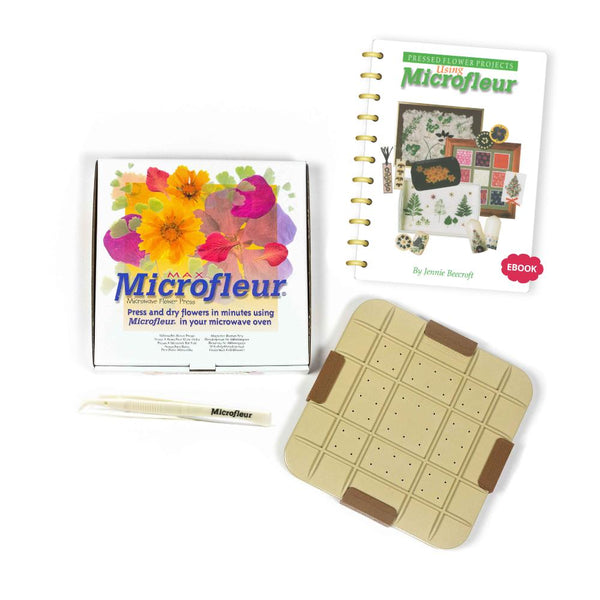
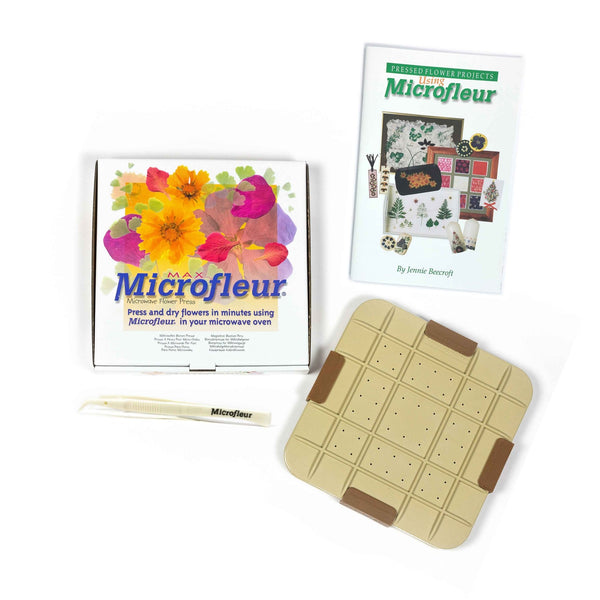
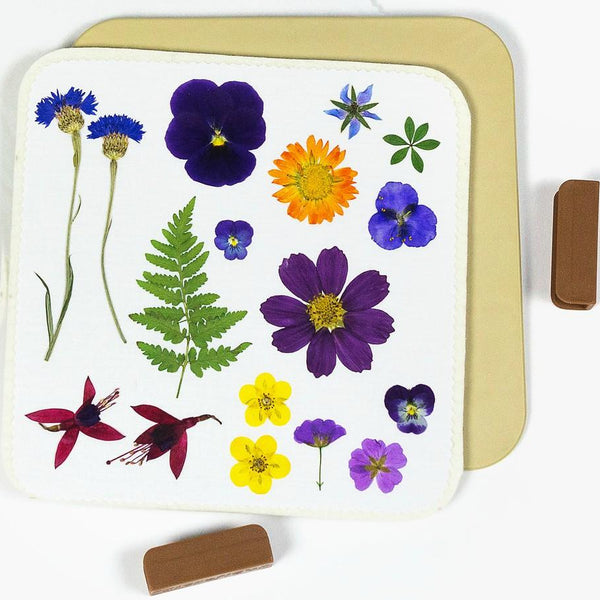
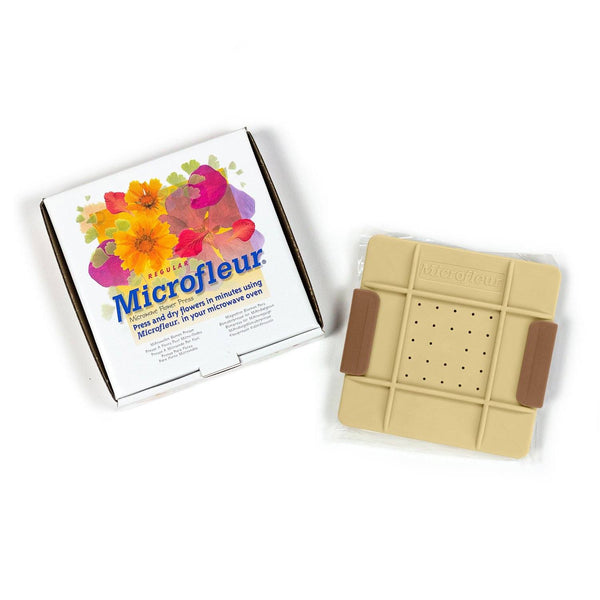
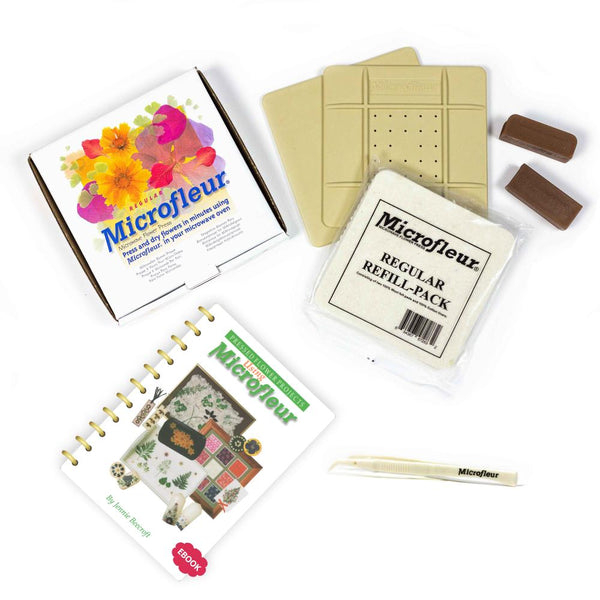
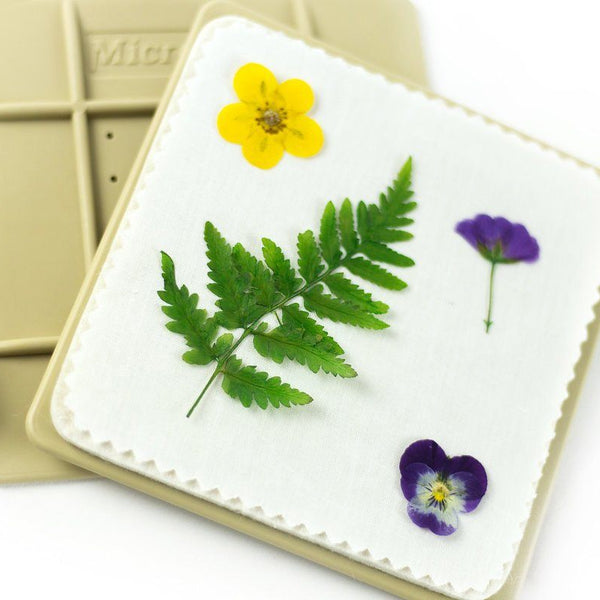
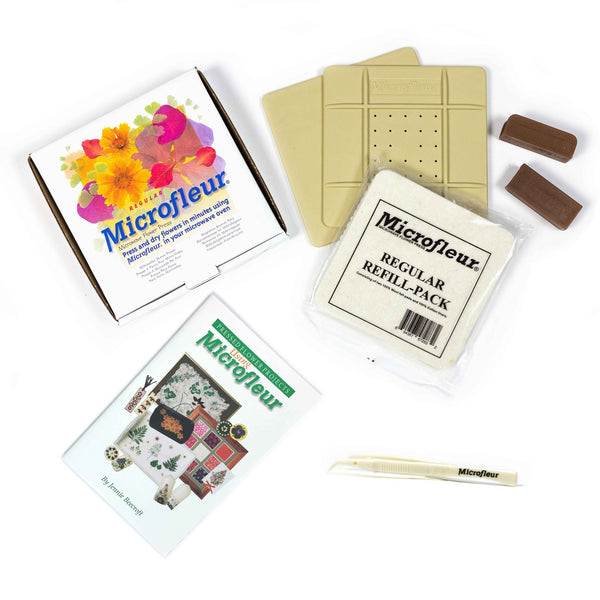
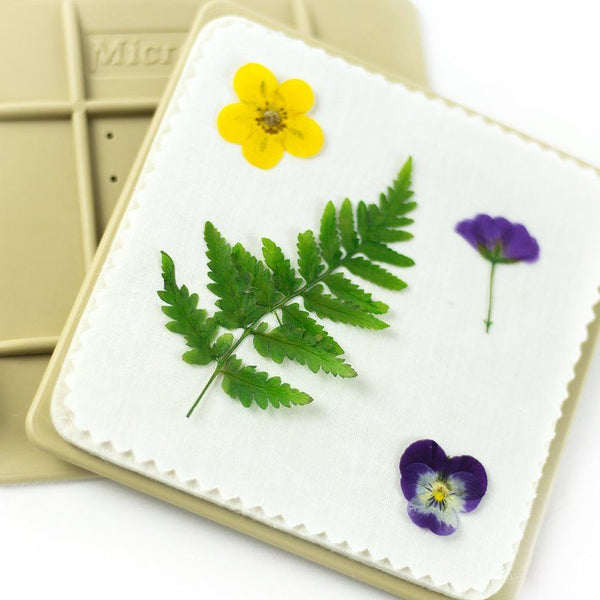
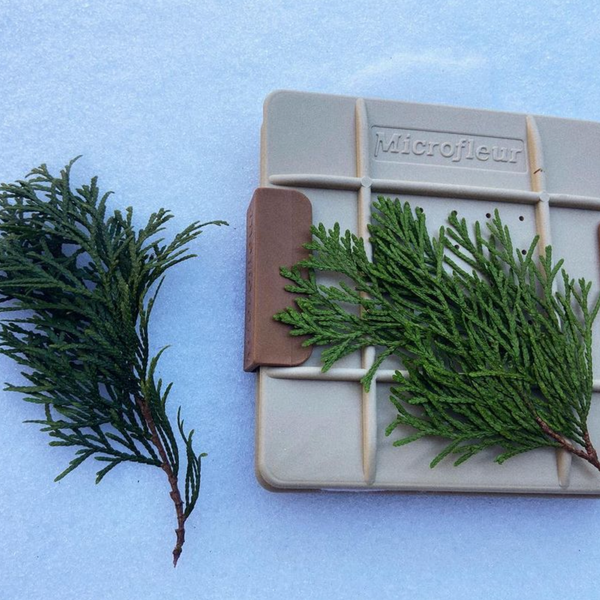
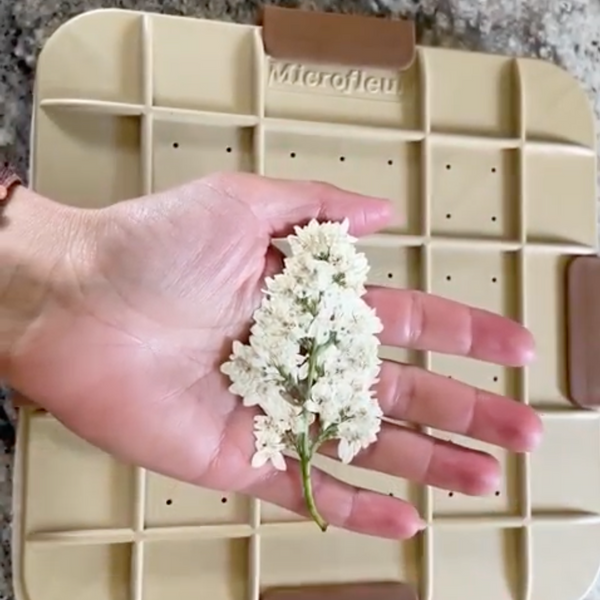
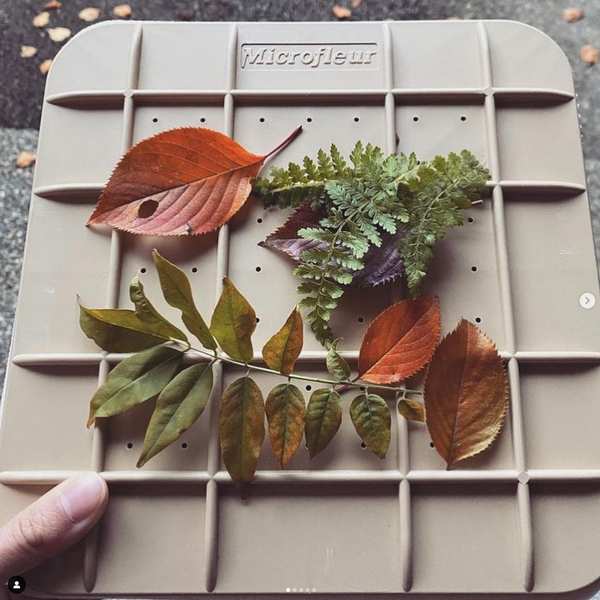
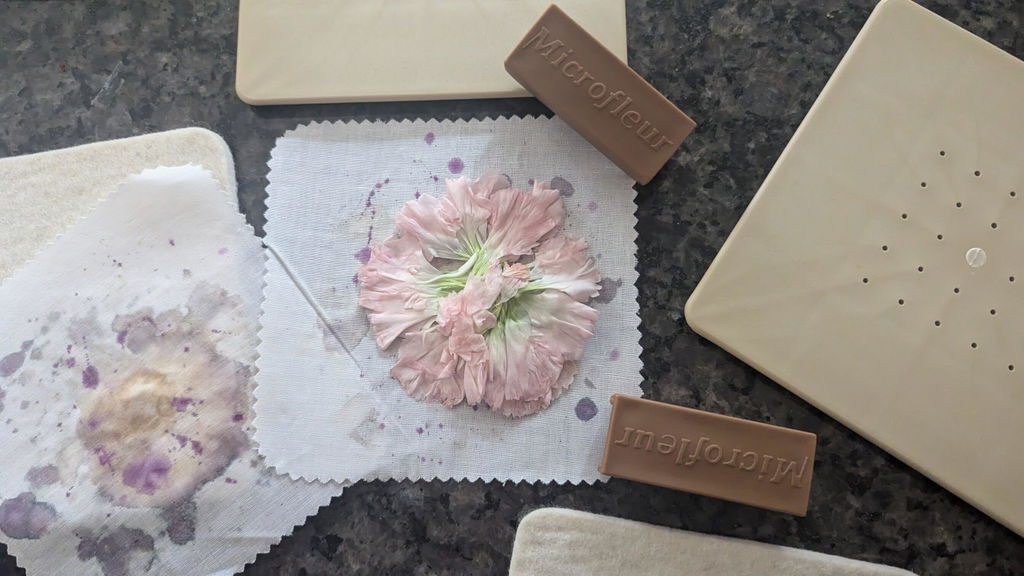
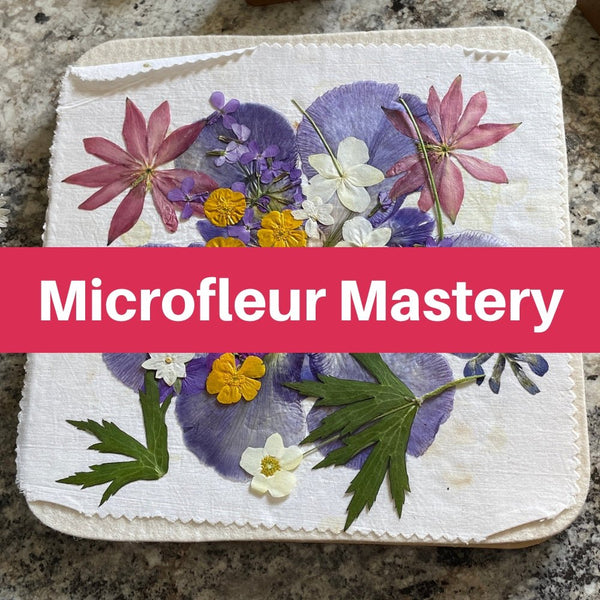
A Microfleur microwave flower press speeds up pressing and helps preserve color. Check for dryness before assembly: moisture left in the flowers can cloud the resin and damage petals.
Assemble and Seal a Paper Bookmark
Cut the cardstock and arrange the flowers without glue to check their placement. Brush on a thin coat of adhesive, set the flowers in place, and press them flat.
Let the bookmark dry for 20–30 minutes, then seal it with a top coat or laminate it. Trim it to size, round the corners, and punch any tassel hole at the top. This keeps the tassel outside the pages.
Cast a Resin Bookmark in Thin Layers
Pour a thin base layer, place the pressed flowers with tweezers, and cover them with another thin layer. Keep every petal and stem below the surface for a smooth finish.
After casting, let the bookmark cure fully and check the finish before use.
Resin Safety and Finish Checks
After casting or sealing your bookmark, check its safety and finish before putting it between pages.
Protect Your Skin, Eyes, and Workspace
Wear nitrile gloves rated for your resin and eye protection when handling uncured resin. Follow the label and safety data sheet (SDS) for glove selection, ventilation, and respiratory protection.
Cover your work surface to catch spills. Keep uncured resin and equipment away from children and pets.
Allow Time for a Full Cure
Dry doesn’t mean fully cured. Surface hardness alone isn’t a reliable test. Wait for the full cure time listed on the resin’s label before using or gifting the bookmark.
Uncured resin can remain sticky, leave residue, and damage pages.
Check for Tackiness, Rough Edges, and Warping
Check the bookmark for tacky (sticky) spots, rough edges, lifted petals, and warped surfaces. Don’t use it if you find any of these flaws. The bookmark should lie flat and have smooth edges so it’s safe for books and ready to use.
Conclusion: Keep Bookmarks Thin and Smooth
Choose paper for the thinnest, simplest bookmark. For a harder, moisture-resistant finish, use resin - but only if you can wait for it to cure fully.
Either way, the bookmark needs to lie flat inside a book. Start with fully dry flowers and arrange the petals before attaching them. Avoid overlaps that add bulk, and keep the finished bookmark flat, light, and smooth.
Before making a batch for gifts or sale, test one bookmark first. Check for color changes after sealing, then check how it fits between pages once it has fully dried or cured. Adjust the flower placement or adhesive before making more.
FAQs
How can I keep pressed flowers from fading?
Use a Microfleur microwave flower press to dry blooms fast and help preserve their natural color. Before sealing or embedding them, check that they’re completely dry and papery. Trapped moisture can cause browning, rot, and discoloration.
Keep finished projects in a dry spot away from direct sunlight, a primary cause of fading. Choose UV-resistant sealants for the best protection against long-term color loss.
Should I seal flowers before casting them in resin?
Yes. Apply a thin coat of sealant to pressed flowers before casting them in resin. This helps preserve the color of delicate petals and keeps them from turning translucent in the resin.
Make sure the flowers are completely dry before sealing. Trapped moisture can cause fading, rot, or curing problems. Let the sealant dry fully before embedding the flowers in resin.
How can I tell if my bookmark is too thick?
Your bookmark may be too thick if it won’t lie flat, visibly buckles, or doesn’t seal smoothly during a trial assembly. Overlapping petals and thick flower centers can keep it from having a thin, smooth finish.
Use single-layer petals, and press every flower until it feels stiff and crisp to keep the bookmark thin.