










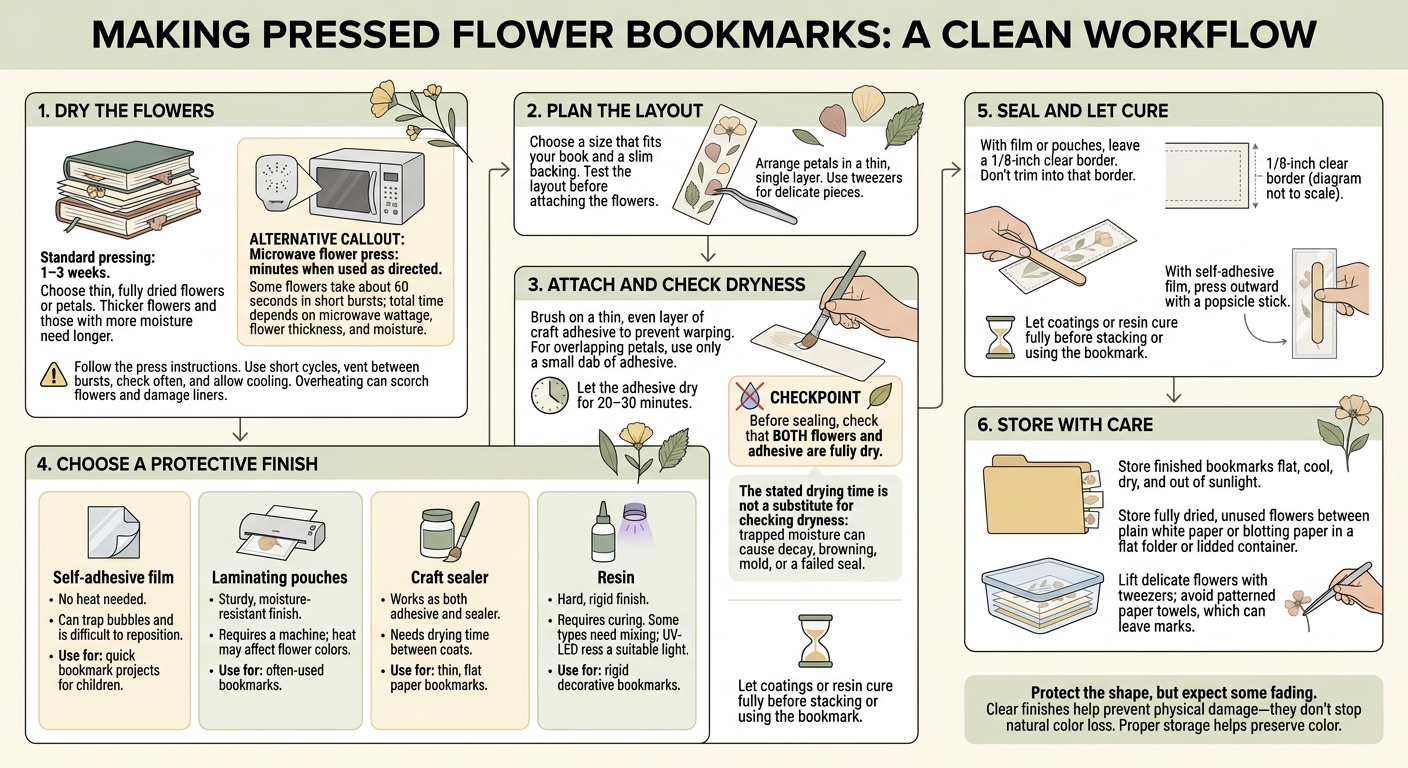
I start with thin, fully dried flowers and a slim backing, then attach them with a light coat of glue. Pressing usually takes 1–3 weeks; a microwave flower press can dry flowers in minutes when used as directed.
- Plan before gluing: Choose a size that fits your book, keep petals in a thin layer, and use tweezers for delicate pieces.
- Choose your protection: Craft sealer suits paper bookmarks, film needs no heat, laminating pouches suit frequent use, and resin makes a rigid bookmark.
- Seal only when dry: Check both flowers and glue. With film or pouches, leave a 1/8-inch clear border.
- Store with care: I keep bookmarks flat, cool, dry, and out of sunlight, and unused flowers between plain paper sheets. Let coatings cure before use.
My rule: <u>protect the shape, but expect some fading</u>. A clear finish helps prevent damage - it doesn’t stop natural color loss.
How to Make a Long-Lasting Pressed Flower Bookmark
Pressed Flower Bookmark
sbb-itb-80d8183
Flower Pressing Times
Standard flower pressing methods usually take 1–3 weeks. Thicker flowers and those with more moisture need longer.
Before attaching a flower, check that its center and petals are fully dry. Sealing it too soon can trap moisture, causing decay or preventing the seal from holding. Thick centers can also leave air gaps during lamination. Once the flowers are dry, you can attach and protect them.
Safe Microwave Flower Pressing
A microwave flower press cuts the drying time. Microfleur dries flowers in minutes instead of weeks. Some flowers take about 60 seconds in short bursts, but the total time depends on microwave wattage, flower thickness, and moisture.
Follow the press instructions for settings, intervals, checks, and cooling. Use short cycles and vent the press between bursts to let steam escape. Check often - overheating can scorch flowers and damage the liners.
Test spare flowers first. Group flowers with similar thickness and moisture levels to help them dry evenly. After cooling, check for remaining moisture. If they’re still damp, continue with short drying cycles as directed. When the flowers feel thin and papery, they’re ready to attach and seal. For more detailed advice, see our flower pressing tips.
Attaching and Protecting Pressed Flowers
Arrange fully dried flowers on cardstock and check that they fit. Then brush on a thin, even layer of craft adhesive to prevent warping. For layered designs, add just a small dab between overlapping petals.
Comparing Protective Finishes
Choose a finish based on how often you’ll handle the bookmark.
| Method | Advantages | Limitations | Use for |
|---|---|---|---|
| Self-adhesive film | No heat needed. | Can trap bubbles and is difficult to reposition. | Quick bookmark projects for children. |
| Laminating pouches | Sturdy, moisture-resistant finish. | Requires a machine; heat may affect flower colors. | Often-used bookmarks. |
| Craft sealer | Works as both adhesive and sealer. | Needs drying time between coats. | Thin, flat paper bookmarks. |
| Resin | Hard, rigid finish. | Requires curing. Some types need mixing; UV-LED resin needs a suitable light. | Rigid decorative bookmarks. This method is also popular for making pressed flower resin keychains. |
With film or pouches, leave a 1/8-inch clear border around the bookmark. Don’t trim into that border.
When to Use Laminate or Resin
Match the finish to the bookmark’s purpose: craft sealer for simple paper bookmarks, laminating pouches for frequent handling, or resin for a hard, rigid finish.
Let the adhesive dry for 20–30 minutes. Before sealing, check that both the flowers and adhesive are fully dry to avoid browning or mold.
Flower Fading and Bookmark Storage
Protective finishes help keep flowers from lifting or breaking, but they don’t stop natural fading. How well flowers hold their color still depends on the flower and drying method.
Reducing Flower Fading
Keep bookmarks out of direct sunlight and avoid prolonged UV exposure. When you’re not using them, store them somewhere dark, cool, and dry.
Color care starts before assembly. Choose newly picked, blemish-free blooms and press them promptly. A Microfleur microwave flower press dries flowers in minutes, which can help preserve their color in your bookmarks.
Finishes protect the bookmark’s structure, while proper storage helps preserve its color.
Storing Bookmarks and Unused Flowers
Store finished bookmarks flat in a cool, dry place, away from sunlight and moisture. Let coatings or resin cure fully before stacking or using the bookmarks.
Place fully dried, unused flowers between sheets of plain white paper or blotting paper, then keep them in a flat folder or lidded container. Lift delicate pieces with tweezers to avoid crushing petals or transferring skin oils. Skip patterned paper towels - they can leave marks on delicate petals.
Steps for a Long-Lasting Bookmark
Choose thin, fully dried flowers or petals that lie flat beneath a clear finish. Keep the base slim enough to leave room for the page edges, and test the layout before attaching the flowers.
Arrange the flowers in a single layer. Apply a thin coat of adhesive, let it dry, then add a protective top coat.
After sealing the flowers, pick a finish based on how often you’ll handle the bookmark. Laminating pouches work well for frequent handling, while self-adhesive film offers a quick seal. If you use film, press outward with a popsicle stick. When trimming, leave a small clear border to keep the seal closed.





















