










Pressed flowers usually feel damp for 2 reasons: moisture from the air or moisture left inside. I’d check the thick centers, layered petals, and stems first - and look for mold before drying them again.
Here’s what I’d do:
- Check when they softened. Flowers that were crisp before storage likely absorbed humidity. Flowers that never felt dry may need more drying time.
- Rule out mold. Separate suspect flowers and discard any with visible mold. Browning alone doesn’t mean mold.
- Dry them again if needed. Use clean, dry absorbent paper, replacing it when damp. For a microwave flower press, follow its heating and venting instructions.
- Check before sealing. Once cool, flowers should stay papery and stiff. I’d store them in an airtight container with a dry desiccant packet, away from heat and light.
<u>Dry first, seal second.</u> Trapping moisture inside can lead to softening, browning, or mold - and damage a finished craft.
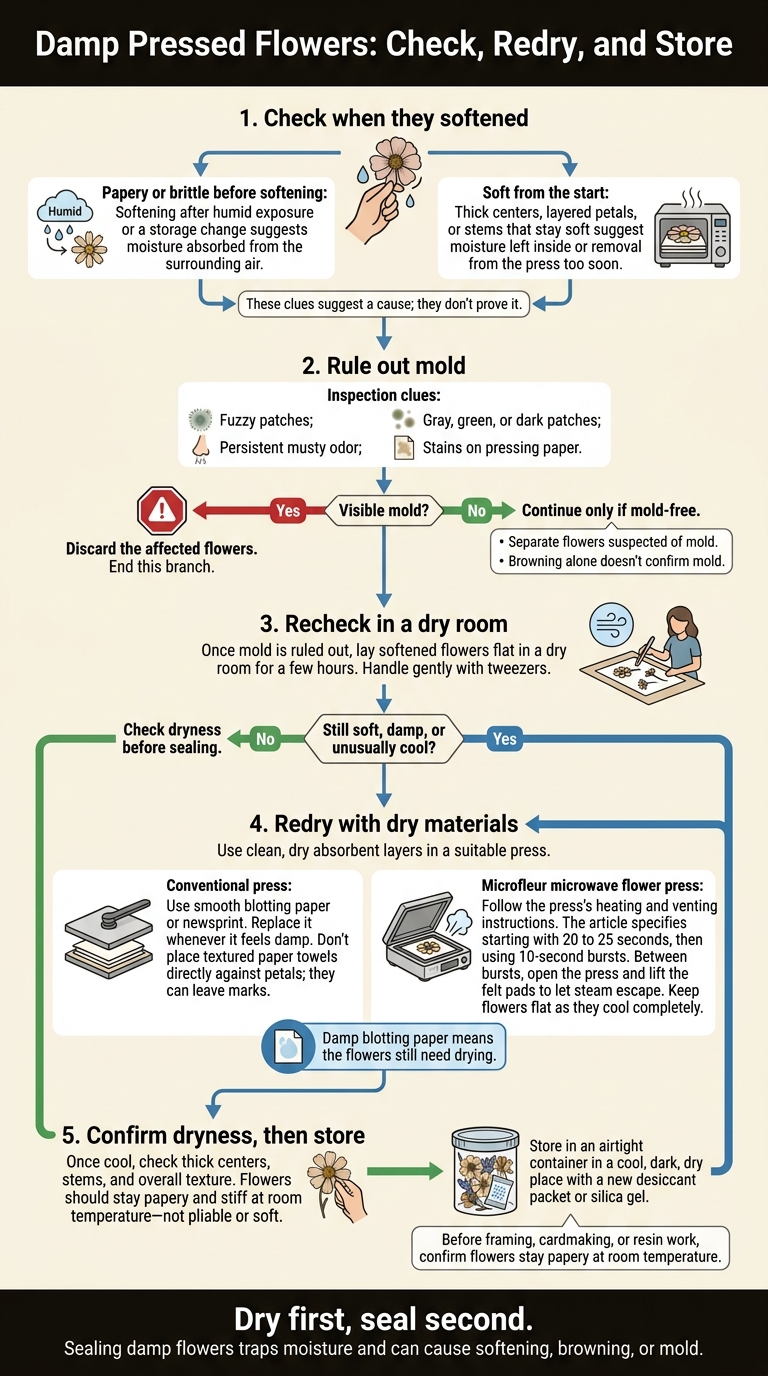
Damp Pressed Flowers: Check, Redry, and Store
Did Flowers Absorb Humidity or Stay Under-Dried?
Timing, texture, and the location of soft spots can help you tell the difference.
| Diagnostic clue | Humidity rehydration | Incomplete drying |
|---|---|---|
| Initial texture | Papery or brittle before softening | Soft from the start |
| Timing | Softens after humid exposure or a storage change | Stays soft immediately after pressing |
| Moisture clues | Dry petals soften after storage | Thick centers, layers, or stems stay soft; blotting paper feels damp |
| Likely cause | Moisture absorbed from the surrounding air | Moisture left inside or removal from the press too soon |
| Response | Move the flower to a dry room and reassess | Keep drying with clean, dry absorbent layers |
These clues suggest a cause; they don’t prove it. Damp blotting paper means the flowers still need drying.
If incomplete drying looks likely, check for moisture tucked inside the bloom.
Check Thick Centers, Petal Layers, and Stems
Check the underside, layered petals, and stems. Petals that feel flat or cool aren’t necessarily dry.
Roses, marigolds, and zinnias can retain moisture in the flower base even when the outer petals feel papery.
Softness in these areas means the flower needs more drying. Handle delicate flowers gently, and assess the whole bloom rather than a single petal, following simple tips for beginners to ensure quality.
If the flower is only damp, check for mold before drying it again.
Check for Mold Before Redrying
Look for fuzzy patches, a persistent musty odor, gray, green, or dark patches, or stains on the pressing paper. Browning alone doesn’t confirm mold: slow drying can also cause color loss. Separate flowers you suspect have mold, and discard any with visible mold.
If there’s no mold, move straight to redrying.
sbb-itb-80d8183
How Does Moisture Return After Drying?
If the flowers are mold-free, their softness usually comes from moisture absorbed from the air. Even fully dried flowers can soften in humid conditions.
Humid Air and Room Changes
High humidity or poor airflow can let dried flowers absorb moisture again. This can happen after moving them to another room or opening their container in damp air.
Loose Closures and Trapped Moisture
A loose closure lets dried flowers keep absorbing room humidity. To prevent this, you can learn to vacuum seal pressed flower art for a permanent, airtight barrier. But sealing a flower while it’s still damp traps moisture inside, which can cause softening, browning, or mold.
If moisture has returned, the next step is to dry the flowers again using flower pressing tips for dry conditions.
What Should You Do With Damp Pressed Flowers?
Recheck Softened Flowers in a Dry Room
Once you’ve ruled out mold, move softened pressed flowers to a dry room and let them lie flat for a few hours. Handle them gently with tweezers. If the petals or centers still feel soft, damp, or unusually cool, they need more drying time.
If they remain soft, press them again with dry materials.
Redry With Dry Absorbent Layers
Use new, dry absorbent layers in a microwave flower pressing kit. For conventional pressing, choose smooth blotting paper or newsprint, and replace it whenever it feels damp. Don’t place textured paper towels directly against the petals - the pattern can leave marks.
For a Microfleur microwave flower press, use short heating bursts, not prolonged heating. Start with 20 to 25 seconds, then switch to 10-second bursts. Between bursts, open the press and lift the felt pads to let steam escape. Keep the flowers flat as they cool completely.
Confirm Dryness Before Storage or Crafting
After the flowers cool, check their thick centers, stems, and overall texture. They should feel papery and stiff, not pliable or soft. Before framing, cardmaking, or resin work, make sure they stay papery at room temperature. Leftover moisture can damage your project.
Once the flowers stay papery and stiff, protect them from humidity. Store them in an airtight container in a cool, dark, dry place with a new desiccant packet or silica gel.
Conclusion: Dry Flowers Fully and Keep Moisture Out
If flowers felt crisp but later softened, they likely absorbed humidity. If the base or areas between tightly packed petals never dried, they likely needed more drying time.
If there’s no mold, dry them again before storing them. Seal flowers in airtight containers only when they’re fully dry to keep room humidity out.
FAQs
Why do my pressed flowers keep softening in storage?
Flowers that soften in storage usually weren’t fully dry or have absorbed moisture from the air. Even if the surface feels dry, the centers or thickest layers may still hold moisture. Fully dried flowers can also absorb moisture in humid conditions.
Before storing pressed flowers, check that they feel brittle and papery. Then place them in an airtight container to keep moisture from the surrounding air out.
What humidity level keeps pressed flowers dry?
Store pressed flowers in a dry indoor space so they don’t absorb moisture from the air. Moisture can turn their brittle, papery texture soft or leave them wilted again.
Once they’re fully dry, keep them in an airtight container to protect them from humidity. If the flowers feel damp, the surrounding air is often too humid.
How can I check for hidden moisture before sealing flowers?
Before sealing, make sure your flowers feel completely brittle, thin, and papery. Flexible, cool, or damp petals and stems likely still hold moisture inside, which can lead to rot or discoloration.
If you’re using a microwave press, open it between heating bursts to let steam escape and check the flowers’ texture. With a standard flower press, check the flowers periodically and swap damp blotting paper for dry sheets.





















