










To limit color changes, I start with fully dry flowers and test a thin coat on a spare bloom. I check the test after 24 hours and again after the coating fully cures. <u>Sealing does not stop all fading.</u>
Here are the seven causes I check - and what you can do about each:
- Trapped moisture: Dry the center and thick petals before sealing.
- Thick or uneven coats: Apply thin, even layers and let each dry.
- Excess heat: Cure at room temperature when the label allows it.
- UV exposure: Keep finished pieces out of direct sunlight.
- Sealant chemistry: Test your coating on the same flower species.
- Natural pigment changes: Check for color shifts before coating.
- Uneven pressing: Spread petals apart and press them flat so they dry evenly. Using a microwave flower press can help lock in color during this stage.
My starting rule: dry fully, test first, and protect the finished piece from sun and heat.
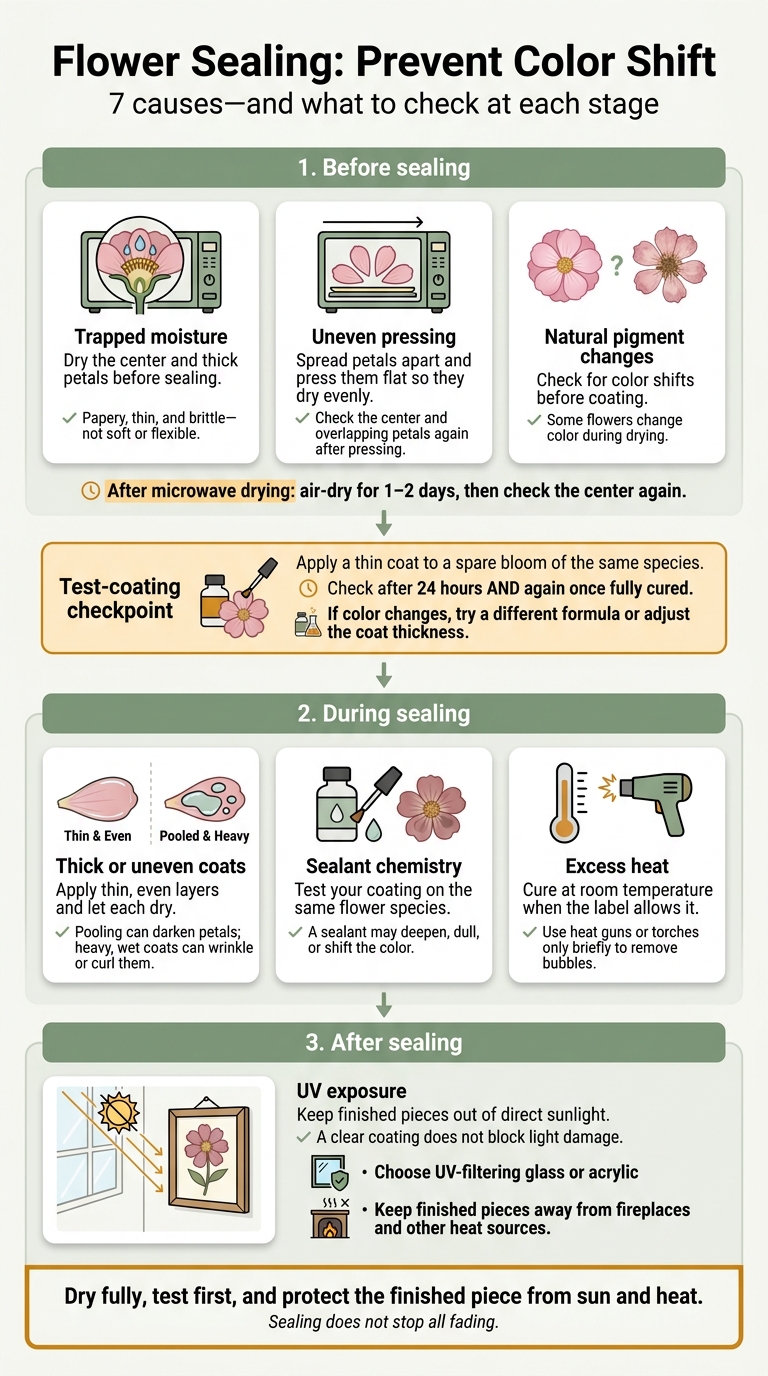
Flower Sealing: Prevent Color Shift
Before Sealing: Check Dryness and Test the Coating
Check the center first. Moisture stays there longest, so a pressed flower should feel papery, thin, and brittle - not soft or flexible. Dense zinnia and marigold centers may still be damp even when the petals feel dry.
Microfleur’s microwave flower press kits press and dry flowers quickly, but flowers must be fully dry before sealing. Heat in short bursts, checking between cycles. For thick blooms, use a paper towel to blot excess moisture from the pads and flower center between bursts.
After microwave drying, let the flowers air-dry for 1–2 days so any remaining moisture can escape. Check the center again before sealing.
Apply a thin coat to a spare test bloom using your planned method, then let it cure. If it looks blotchy or too transparent, dry the flowers longer or try a thinner coat. Wet layers can wrinkle delicate petals. If the test passes, move on to trapped moisture.
sbb-itb-80d8183
1. Trapped Moisture
Moisture left inside a flower is the fastest way to dull its color. Sealing too soon traps moisture, which can brown petals, fade color, and cause decay over time. Damp flowers can also develop blotches or mold before sealing.
Properly prepare and dry the entire flower, paying extra attention to the center and thickest parts. These areas dry last.
For fleshy blooms like roses, split the bloom or separate the petals before pressing so thickest parts dry faster.
Even after pressing, damp materials can put moisture back into the flowers. Replace absorbent paper whenever it becomes damp. Choose plain white, craft, or blotting paper - not wax or parchment paper, which can trap moisture. If you use Microfleur cotton liners, wash them and dry them flat before reuse.
Store dried flowers flat in a cool, dry, airtight container to keep them from absorbing moisture again before sealing.
2. Thick or Uneven Coats
Even fully dry flowers can change color if you apply too much sealant. Thick or uneven coats let sealant pool, darkening the petals. Clear sealants also add gloss, while heavy, wet coats can wrinkle or curl thin petals.
Apply thin, even coats, and let each one dry completely before adding the next.
3. Excess Heat During Sealing or Curing
Even fully dry flowers can change color when sealing gets too hot. Hot workspaces, heat curing, and nearby fireplaces can fade pigments, brown petals, and leave flowers brittle. Heat during sealing can also trap moisture and scorch petals.
Some resins give off heat as they cure. If flowers aren’t fully dry, that heat can brown the petals or cause decay. Use heat guns or torches only briefly to remove bubbles.
Cure at room temperature when the product allows it. Keep finished pieces away from fireplaces and other heat sources, and limit any heat used for bubbles to brief bursts.
4. UV Exposure After Sealing
Heat isn’t the only risk after sealing. A clear coating does not block light damage. It protects the surface during handling, but UV light can still break down flower pigments and fade their color.
Display finished pieces on interior walls, away from direct sunlight and not opposite windows. Even window light can fade flowers. Choose UV-filtering glass or acrylic instead of standard framing glass, and keep the piece out of direct sun.
5. Sealant Chemistry
Dry flowers kept out of direct sunlight can still change color when sealed. A sealant may deepen, dull, or shift the color, depending on its formula and the flower.
| Sealant type | Color shift risk | Quick fix |
|---|---|---|
| Acrylic sprays | May add gloss or slight translucency. | Test with light mists first. |
| Brush-on decoupage mediums | May soften petals or cause pigment bleeding. | Apply thin coats and let each coat cure. |
| UV or epoxy resin | May deepen color; trapped moisture can cause browning or bubbles. | Use only fully dry flowers. |
Test a spare bloom of the same species before sealing your finished piece. Check it after 24 hours and again once the sealant has fully cured. If its color changes, try a different formula or adjust the coat thickness.
Follow the label’s instructions for ventilation and personal protective equipment (PPE). Use nitrile gloves and an organic-vapor respirator when working with sprays and resin.
6. Natural Pigment Changes
Even with proper sealing, some flowers change color during drying because their pigments break down before the coating goes on.
Check the dried flower before sealing. If its color has already changed, drying caused the shift. If it changes after coating, the sealant caused it.
Press newly picked blooms promptly, keep drying papers dry, and replace damp sheets to help prevent petals from browning before sealing.
Some natural color variation is normal - even flowers of the same species can dry to different shades. If the flower’s shape is uneven or pressure marks show through, the next issue to check is flower pressing quality.
7. Uneven Pressing
Uneven pressing can leave hidden moisture and surface bumps that show after sealing. Thick centers and overlapping petals dry last, and trapped moisture can cause dark spots. Bumps also trap air, leading to bubbles and patchy coverage.
Press flowers flat, with petals separated and spread apart. This helps them dry evenly, seal cleanly, and retain their color. For thick roses, cut the bloom in half and press each half separately. Use plain blotting paper rather than textured paper towels, which can leave impressions on the petals.
Spread pressure across the entire press, not just the center. Handle delicate petals with tweezers; fingers can bruise them and leave dark marks after sealing.
Check the center and overlapping petals again after pressing. They should feel papery and stiff, without soft spots. Drying time alone doesn’t tell you whether a flower is ready, as different flower pressing methods vary in speed. If the center still bends easily, press it again or let it dry longer before sealing so it seals evenly and holds its color better.
Conclusion: Dry Fully, Test Coatings, and Protect Your Flowers
For the safest sealing results, make sure your flowers are fully dry before applying any coating.
Test the coating on a spare bloom first. Then apply thin coats, letting each one cure fully before adding the next.
Store and display sealed flowers away from direct sunlight and high heat to help limit fading. Some natural color change can still happen.
FAQs
Can I restore flower color after sealing?
Once a flower’s color shifts or fades during sealing, you generally can’t bring back its original shade. Trapped moisture or UV exposure can cause permanent changes through oxidation or pigment breakdown.
To help prevent color loss, dry flowers completely before sealing them. A Microfleur microwave flower press dries blooms quickly, helping preserve their natural pigments. Keep sealed pieces out of direct sunlight to slow fading.
How can I tell what caused the color shift?
Check when the damage appeared and what it looks like. Brown, moldy, or decayed flowers suggest trapped moisture. Before sealing, flowers should feel brittle and papery.
Fading after sunlight exposure points to pigment degradation. Acidic paper can change pigments, while too much heat can scorch petals.
If flowers look translucent or cloudy in resin, the cause may be a resin issue or trapped air. Test a small sample using your drying and sealing methods.
How long will sealed flowers keep their color?
Sealed flowers can hold their color for years with proper preservation, but all pressed flowers eventually fade, especially in direct sunlight. Before sealing, make sure the flowers are completely dry. Use a high-quality pressing method, such as a microwave press, to help keep their colors bright. Store finished pieces away from harsh light, and consider vacuum sealing for added protection.





















