










No wildflowers? I’d start with garden blooms, grocery bouquet petals, or flowers a potted plant can spare. Choose dry, unblemished pieces, trim thick centers, and leave ½–1 inch between them in the press.
Here’s how I’d choose and use them:
- Garden flowers: Pick after dew dries, only where you have permission.
- Grocery flowers: Separate roses and carnations into petals or smaller pieces.
- Potted flowers: Take only what the plant can spare.
- Pressing method: Allow about 1–4 weeks for a book press. For microwave pressing, use a microwave-safe kit such as Microfleur and follow its instructions - not an ordinary book or wooden press.
- Storage and projects: <u>Store only fully dry, cooled flowers.</u> Keep them flat, dry, and out of sunlight, then use them for cards, bookmarks, or framed art.
My starting point: a small batch of flat blooms or individual petals. Record the drying time and color so you can adjust your next batch.
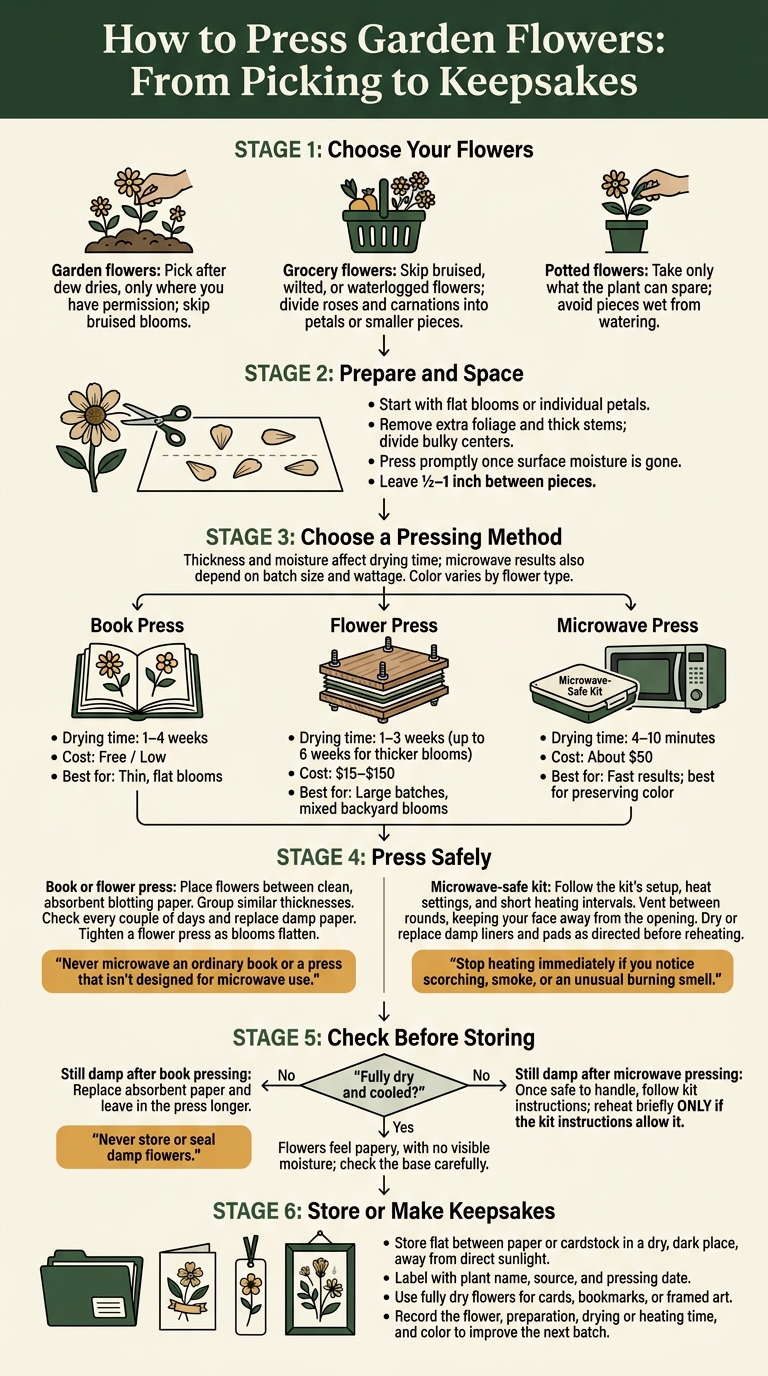
How to Press Garden Flowers: From Picking to Keepsakes
Flower Pressing for Beginners: An Easy Step-by-Step Guide
sbb-itb-80d8183
Choose and Prepare Flowers From 3 Sources
Thickness and moisture matter most. Divide bulky flowers into smaller pieces so their dense centers don’t trap moisture.
Backyard Flowers: Pick After Dew Dries
Backyard blooms offer a seasonal supply. Pick them after the dew dries, and skip any bruised flowers. Remove extra foliage, trim thick stems and bulky centers, then lay the blooms face-down. Gently smooth the petals into place, leaving 0.5 to 1 inch between specimens to help prevent sticking.
Grocery Flowers: Divide Dense Blooms
Grocery flowers provide a year-round backup. Remove the packaging, extra foliage, and thick stems. Skip flowers that are bruised, wilted, or waterlogged. If the petals feel damp, put the stems in clean water and let the flower heads air-dry for a few hours.
Separate roses into individual petals or cut the heads vertically in half. Break carnations into smaller sections or individual petals. Press them promptly once the surface moisture is gone.
Potted Plants: Take Only What the Plant Can Spare
Before cutting, check how much pruning the plant can tolerate. Take only what it can spare. Small leaves, flat blooms, and individual petals give you material to press without stripping the plant. Avoid pieces wet from watering, and use craft tweezers to position delicate pieces.
With the flowers dry and trimmed, choose a book press, flower press, or microwave method based on their thickness and moisture.
Choose a Flower Pressing Method
Pick your method based on budget and drying time. Thicker, wetter blooms take longer to dry. Use a book or flower press to keep costs down, or choose microwave pressing for fast results.
| Method | Drying Time | Cost | Best For |
|---|---|---|---|
| Book Press | 1–4 weeks | Free / Low | Thin, flat blooms |
| Flower Press | 1–3 weeks (up to 6 weeks for thicker blooms) | $15–$150 | Large batches, mixed backyard blooms |
| Microwave Press | 4–10 minutes | About $50 | Fast results; best for preserving color |
Book or Flower Press: Replace Damp Paper
Place prepared flowers between sheets of clean, absorbent blotting paper without overlapping them. A book relies on weight to apply even pressure; a wooden press uses bolts or straps. Group flowers of similar thickness so each gets even pressure.
Check every couple of days. Replace damp paper with dry sheets, and tighten a flower press as the blooms flatten. Keep the flowers in place until they’re fully dry to prevent mold.
Microwave Press: Follow the Kit Instructions
Microfleur is a microwave flower press with vented platens, felt pads, and cotton liners. Follow the kit’s setup, microwave, and safety instructions. Flower thickness, moisture, batch size, and microwave wattage affect both drying time and color, so begin with a small practice batch.
Never microwave an ordinary book or a press that isn’t designed for microwave use. Hidden metal can arc, and trapped steam can scorch petals. Heat in short intervals, venting between rounds.
For exact placement and heating steps, follow the Microfleur workflow next.
How to Press Flowers With Microfleur
Once your flowers are trimmed and dry, load the press. Start with a small batch.
Choose a Press Size and Arrange the Flowers
Choose the Regular kit for small batches or the Max for larger ones. Thin dense flower heads before pressing to help them dry evenly.
Assemble the press according to the kit’s instructions. Set the flowers face-down on the fabric liner, spread the petals flat, and leave 1/2 to 1 inch between pieces.
Heat in Short Intervals, Then Cool
Stick to the kit’s heat settings and short heating intervals. Vent steam between rounds, keeping your face away from the opening. Keep the inner liners over the flowers as they cool. Before reheating, dry or replace damp liners and pads as directed. Stop heating immediately if you notice scorching, smoke, or an unusual burning smell.
Let the flowers cool completely before checking dryness or storing them. They should feel papery, with no visible moisture. Pay close attention to the base.
Fix Damp Flowers and Uneven Pressing
| Problem | Adjustment |
|---|---|
| Still damp | Once safe to handle, blot moisture from the pads and flower bases as directed. Reheat briefly ONLY if the kit instructions allow it. |
| Browning or scorch marks | Stop heating. For later batches, use shorter intervals and allow more cooling, following the kit’s guidance. |
| Sticking | Gently stretch the cooled liner in opposite directions to release the petals. Don’t pull them free. |
| Uneven flattening | Before reheating, fix overlaps and divide dense centers as directed. Group pieces with similar thickness. |
Color varies by flower type. Record the flower, preparation, and heating time to help you adjust later batches within the kit’s instructions. Once the flowers are fully dry, move them to storage or start a new pressed flower project.
Store Pressed Flowers and Make Keepsakes
Store pressed flowers only when they’re fully dry and cooled. Keep them flat between sheets of paper or cardstock in a dry, dark place, away from direct sunlight. Label each batch with the plant name, source, and pressing date.
Never store or seal damp flowers. If book-pressed flowers still feel damp, replace the absorbent paper with dry sheets and leave them in the press longer. Trapped moisture can lead to mold or discoloration.
To make pressed-flower cards, arrange the flowers on cardstock or handmade paper, then glue them in place. Use a fine brush or toothpick to dab a small amount of archival glue onto the backs of the petals. Go lightly - too much glue can stain them. Add the plant name and collection date.
For bookmarks, arrange the petals on cardstock before securing them. Microfleur also offers stationery and crafting tweezers for assembly. For framed arrangements, plan the layout before attaching anything, then frame the flowers behind glass to protect them from dust and moisture. Keep finished cards, bookmarks, and framed art out of direct sunlight to help limit fading.
Conclusion: Start With Flat Blooms or Petals
When wildflowers are scarce, try backyard blooms, grocery petals, or spare potted flowers. Pick only with permission, and take only what your plants can spare.
Start with flat blooms or individual petals. Make sure their surfaces are dry, and arrange them without overlap.
For microwave pressing guidance, use Microfleur press kits and tutorials. Press a small test batch and record the flower, drying time, and color. Store it only when fully dry.
FAQs
Which garden flowers hold their color best when pressed?
Violas, pansies, cosmos, daisies, calendula, poppies, and asters work well for pressing because their single layer of petals lies flat. Zinnias also hold their bright color well. Choose fully open flowers without blemishes, picked while they’re still at their best.
For larger blooms, such as roses or peonies, press individual petals instead of the whole flower. A Microfleur microwave press dries flowers in minutes and helps preserve their natural color.
Can I press grocery flowers that are starting to wilt?
You can press grocery store flowers successfully - just choose blooms that haven’t started to wilt. Wilting flowers may hold too much moisture or already be breaking down. That increases the risk of discoloration and mold, which can hurt the quality of your pressed art.
For the best results and color retention, press your blooms promptly using a Microfleur microwave flower press.
How can I keep pressed petals from becoming brittle?
Fully dried flowers are naturally brittle and delicate. Always use tweezers to move or lift them without causing damage. If petals stick to the pressing paper, gently bend the paper away from the flower or lightly stretch the liner in opposite directions to free them. When adding dried flowers to projects, handle them gently and secure them with a small amount of adhesive.





















