










I’d choose glue for a first pressed flower box and resin for a glossy, protective finish. Glue costs less and needs fewer tools. Resin adds depth and protection, but some epoxies need up to 3 days to harden.
Before either finish, I’d <u>dry and prepare the flowers completely</u> and test a spare petal for color changes. Neither option prevents all fading.
Quick Comparison
| Factor | Glue | Resin |
|---|---|---|
| Finish | Flat; matte or glossy | Glossy; can be domed |
| Color | Glue and topcoats can alter petals | Trapped moisture can darken petals |
| Ease | Simple application; fewer tools | Mixing, bubble control, and safety gear |
| Drying time | Follow label; topcoats add time | Minutes for UV resin to days for epoxy |
| Starting cost | Lower | Higher |
| Beginner fit | My pick for a first box | For those willing to do more prep |
For resin, I’d follow the product’s mixing and safety instructions, work with ventilation, and keep it away from hinges. For either finish, I’d wait until it is fully dry or cured before wrapping - and keep the finished box dry.
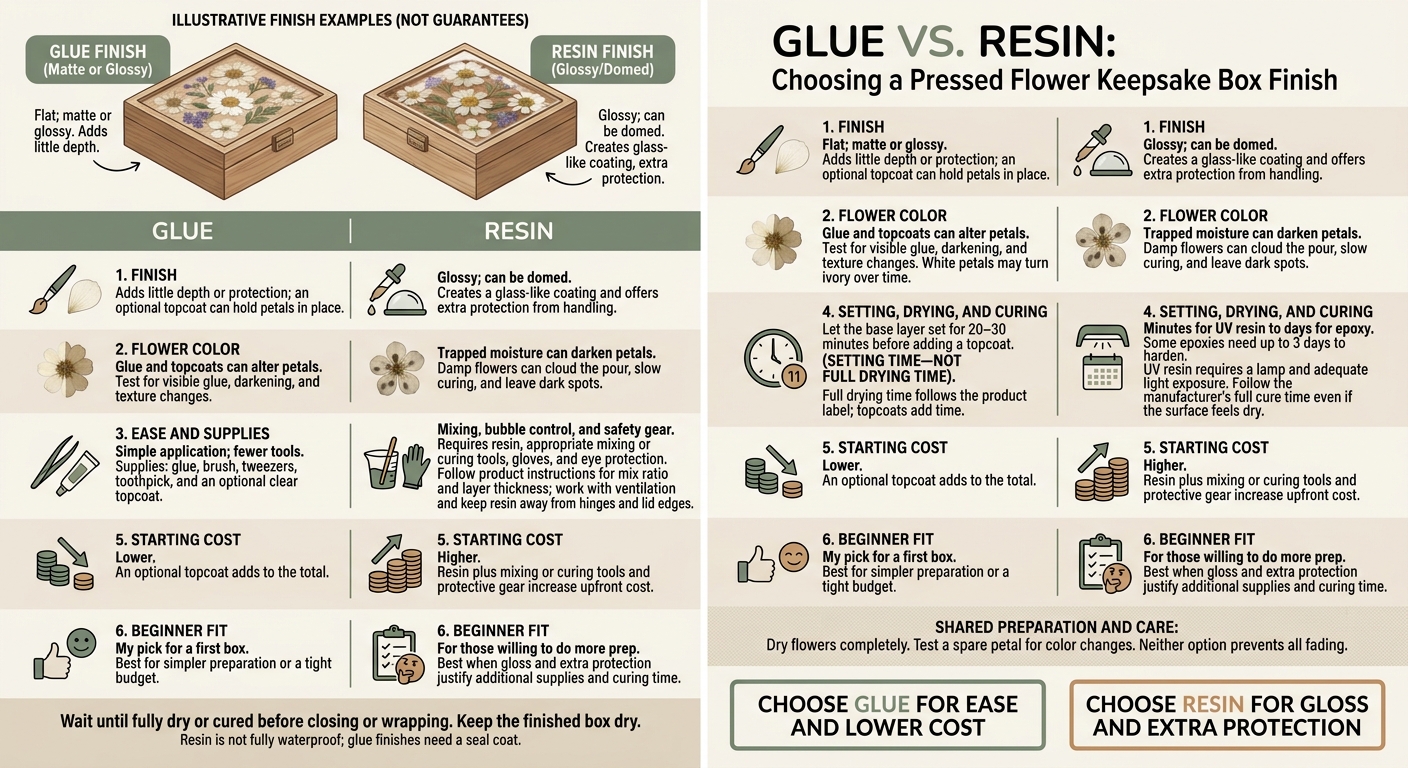
Pressed Flower Box: Resin vs. Glue
Pressed Flower Boxes
sbb-itb-80d8183
Resin: A Glossy, Protective Surface
Clear craft epoxy forms a glass-like, domed coating that protects petals from handling. Resin gives keepsake boxes a polished finish, while glue is the simpler option. That gloss requires more careful prep and time to cure.
Gloss and Changes in Flower Color
Resin can change flower color, especially if the petals still contain moisture from microwave flower pressing. Damp flowers can cloud the pour, slow curing, and leave dark spots. Setup and supply costs are another trade-off.
Mixing, Curing, and Supply Costs
Follow the resin manufacturer’s instructions for the mix ratio, layer thickness, and cure time. UV resin cures in minutes under a lamp. Resin costs more because you need epoxy, mixing tools, and protective gear.
Resin Safety and Box Preparation
Clean the box with rubbing alcohol. Work in a ventilated area, wear gloves and eye protection, and keep resin away from hinges and lid edges.
Pour a thin base layer to hold the flowers in place, then add thin top coats. Use a toothpick to reach corners and work out bubbles, then make one quick torch pass to clear the surface.
Glue: Simple Application and Lower Cost
Glue costs less than resin, is easier to apply, and needs fewer tools. The trade-off? It adds little depth or protection. Arrange fully dried flowers before gluing. A topcoat can hold petals in place, but the finish stays flat.
Finish, Color Changes, and Testing
Glue can dry matte or glossy. Before applying it to your box, test clear craft glue and any topcoat on a spare petal and a hidden spot. Check for visible glue, darkening, or changes in texture. White petals may turn ivory over time, so check the flowers after drying. Once you've tested the finish, move on to placement and drying.
Placement, Drying, and Supply Costs
Use nylon crafting tweezers to lift flowers by the thicker parts of their petals, then guide them into place with a toothpick. Handle petals gently: pressing too hard can leave marks. Microfleur offers nylon crafting tweezers.
Let the base layer set for 20–30 minutes before adding a topcoat. This is setting time - not full drying time. That short wait helps when you're finishing a box for a gift. You only need glue, a brush, tweezers, a toothpick, and an optional clear topcoat.
Resin vs. Glue: 6 Factors to Compare
Glue favors ease and speed; resin favors gloss. Pressed, fully dry flowers hold their color best, but neither finish stops all fading.
| Factor | Resin | Glue |
|---|---|---|
| Finish | Glossy and glass-smooth, with the option of a domed finish. | Flatter finish with a light hold. |
| Color retention | Flowers must be fully dry before coating. Trapped moisture can darken petals. | Microwave pressing helps preserve color before gluing. |
| Ease of use | Requires mixing, bubble control, and protective gear. | Simple and beginner-friendly, with fewer tools needed. |
| Dry/cure time | Curing takes anywhere from minutes to days. | Usually ready to handle sooner, though topcoats need extra drying time. |
| Cost to start | Higher upfront cost for resin and curing or mixing tools. | Lower upfront cost, though an optional topcoat adds to the total. |
| Best for beginners | Better for makers who want gloss and don't mind waiting for it to cure. | Usually the simpler choice for a first keepsake box gift. |
Conclusion: Choose Glue for Ease or Resin for Gloss
Your choice comes down to finish, cost, and drying time. Choose glue for your first gift box or a tight budget. If you're just starting out, a flower pressing starter kit can help you prepare blooms quickly. Go with resin for a sealed, glossy finish and extra protection - if you’re willing to use more supplies and allow more curing time.
Let the Finish Dry or Cure Before Wrapping
Let the finish dry or cure completely before wrapping the box. Glue dries faster than resin, but it still needs to dry fully before you close or wrap the box. Any topcoat must dry completely, too.
For resin, follow the full cure time, even if the surface feels dry. UV resin needs enough light exposure on all sides.
Care for the Finished Box
Keep the sealed box dry. Resin isn’t fully waterproof, and glue finishes need a seal coat.
FAQs
Can I apply resin over glued flowers?
Yes, you can apply resin over glued flowers. Before adding resin, coat pressed flowers with a thin layer of glue or spray sealant. This protects delicate petals, helps prevent them from turning translucent or cloudy, and keeps them visible in the resin.
Let the glue or sealant dry completely before pouring resin to avoid rot, fading, or improper curing.
How can I tell if my flowers are fully dry?
Check the texture: Fully dried flowers should feel brittle, crisp, and paper-like. If the petals, centers, or stems still feel soft or flexible, they likely hold moisture. That moisture can cause browning, rot, or color fading in resin.
A Microfleur microwave flower press kit dries and presses flowers in about 1.5 to 3 minutes while helping preserve their natural color.
Which finish works best on a wooden box?
The best finish depends on the look and durability you want. Resin works well for a glossy, hard-wearing surface that adds protection. Microfleur’s Hand Crafter UV-LED Resin leaves a clear, smooth, non-sticky finish and cures in 1 to 2 minutes under a UV-LED lamp.
If you prefer a classic or matte look, a clear craft sealer provides a reliable finish that keeps pressed flowers in place.




















