










If I want the safest pick for pressed flowers, I choose late morning. In most cases, 10:00–11:00 AM is the best window because dew is usually gone, petals are dry, and the day’s heat has not worn the bloom down yet.
Here’s the short answer:
- Morning wins most of the time
- Evening can work, but only if blooms are still dry, cool, and firm
- The 3 checks for choosing and preparing flowers that matter most are:
- Moisture
- Firmness
- Color condition
- Delicate flowers like cosmos, poppies, and pansies usually do better in the morning
- Sturdier flowers like zinnias, marigolds, and sunflowers may still be okay in early evening
- If petals feel wet, limp, warm, or soft, I wait
A pressed flower keeps what I pick. Damp petals can turn brown. Wilted blooms can flatten badly. And if drying takes too long, color often fades. That means picking time is not just a small detail - it shapes the final result. This is especially true when using microwave flower pressing to lock in those colors quickly.
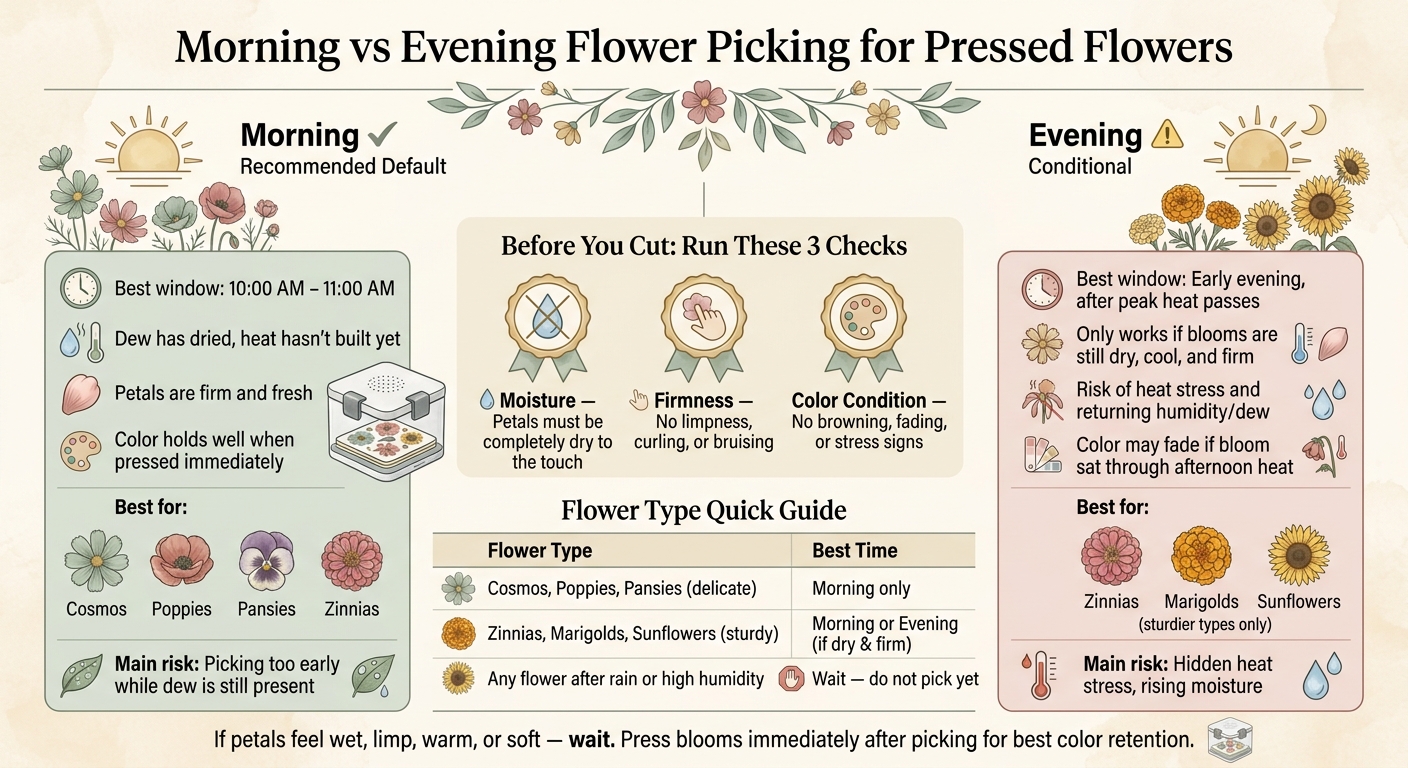
Morning vs Evening Flower Picking: Which Time Is Best for Pressing?
Time of Day Matters When Picking Flowers to Press
sbb-itb-80d8183
Quick Comparison
| Factor | Morning | Evening |
|---|---|---|
| Dryness | Good after dew dries | Good only if humidity stays low |
| Firmness | Often stronger before heat builds | Can drop after a hot day |
| Color hold | Usually better if pressed right away | More risk if bloom sat through heat |
| Best for | Most flowers, especially thin petals | Only flowers still crisp and dry |
| Main risk | Picking too early while dew is still on petals | Heat stress and dampness returning |
If I have to choose one default, I go with late morning. If I miss that window, I only pick in the evening when the flower still passes all three checks: dry, firm, and not stressed.
Morning Picking: Best After Dew Dries
For most pressed flower projects, midmorning - around 10:00 AM to 11:00 AM - is the safest time to pick. By then, the dew is usually gone, but the day’s heat hasn’t had much time to wear the flowers down. It’s a simple sweet spot for clean, dry, color-safe harvesting.
What morning conditions do well
Flowers tend to stay firm after a cool night, which makes them easier to place in the press without tearing, curling, or folding in awkward ways. Thin-petaled blooms like cosmos, poppies, and zinnias are often smart morning picks because they dry fast and keep their shape nicely.
One rule matters more than any other: petals and centers must be completely dry to the touch before you cut. Even a little surface moisture can lead to browning or mold once the flowers are in the press.
What to watch for in the morning
The big upside is fresher, firmer blooms. The main risk is getting started too early, before all that surface moisture has dried off. And once you cut them, move fast. Press the blooms as soon as possible - don’t let them sit around on a counter or basket. If they start to wilt before pressing, that wilt usually shows up in the finished piece.
| Factor | Morning picking | Evening picking |
|---|---|---|
| Surface moisture | Can be high early from dew; better once petals are fully dry | Often dry after a clear day, but humidity may rise again later |
| Petal firmness | Usually firm and easy to arrange | Good only if blooms stayed crisp through the day |
| Color hold | Strong when harvested surface-dry at peak freshness | At risk if heat stress or rising dampness has already set in |
| Best use | Pick once dew is gone, then press right away | Check carefully for wilting or returning dampness before pressing |
So, morning is usually the safer default. Still, evening can work if the flowers have stayed cool, crisp, and dry.
Evening Picking: When It Works and When It Does Not
If you miss the morning window, evening can still work. But the rules get stricter.
For evening picking to work, flowers need to meet the same standard as morning-picked blooms: dry, cool, and firm. If they don't, it's not worth the risk.
When evening works well
Early evening is your best shot. Aim for the stretch after the worst heat has passed, but before humidity climbs or dew starts to settle.
Some flowers handle this timing better than others. Thin-petaled blooms like cosmos and zinnias are usually a better fit for evening picking.
Before cutting, do a quick touch test. The petals should feel cool, dry, and firm. It also helps if the blooms have bounced back from the afternoon heat. A flower may look fine from a distance, but your fingers will tell you more.
When evening is risky
This is where things get tricky. A bloom can look fresh and still be dealing with heat stress. If it feels limp or has browning around the edges, leave it alone. The line between a good evening pick and a bad one is pretty thin.
Moisture is the other big problem. Once humidity starts to rise or dew comes back, the risk goes up fast. Flowers for pressing in a microwave flower press need to be completely dry. Even a little moisture on the petals can lead to browning or mold in the press.
How Moisture, Firmness, and Color Compare
Three things tell you if a bloom is worth pressing: dryness, firmness, and color. Before you cut anything, run those three checks. The best flower to press is dry, firm, and not stressed.
| Factor | Morning advantage | Evening advantage | Best practice |
|---|---|---|---|
| Moisture level | Better once dew has dried | Better if the day stayed dry and humidity is low | Pick only when petals are dry to the touch |
| Petal firmness | Often strongest before heat builds | Can still be good if blooms stayed crisp all day | Avoid limp, curled, or bruised flowers |
| Color considerations | Fresh flowers often keep color well if pressed quickly | Good color is possible if blooms were not wilted by heat | Press soon after harvest for better results |
The flower type can sway the timing a bit, but these three checks still make the call. If a bloom fails here, it probably won’t press well.
Moisture: Why dry petals press more cleanly
A flower can feel solid and still be too wet on the outside. That outer moisture, whether it comes from dew or heavy humidity, is what causes trouble. Put wet petals into a flower press and the water gets trapped. That slows drying and can lead to mold, browning, or flowers that dry in odd shapes instead of lying flat.
The easiest test is also the best one: touch the petals before cutting. If they feel cool or clammy, wait. If they feel dry, they’re ready.
Petal firmness and color hold
Firm petals are much easier to place in the press. They’re also less likely to tear, crease, or fold while you arrange them. And here’s the hard truth: any bruising, cracking, or limpness you see before pressing does not go away. It stays there. Once you have perfect specimens, you can use them for pressed flower resin keychains or other crafts.
Color usually holds better when you press the flower soon after picking. A hot day can dull or fade petals before they ever make it into the press, so blooms that sat through the afternoon heat can be a bit of a gamble. As journalist Daisy Bowie-Sell puts it: "Flowers for pressing should be as fresh as possible and dry (not dewy)."
Which Flowers Fit Each Time and the Best Final Choice
Morning vs evening by flower type
Once you've checked for dryness and firmness, flower type is the next thing to look at. Some blooms are forgiving. Others aren't.
Delicate, thin-petaled flowers like cosmos, poppies, and pansies do best in the morning, after the dew has dried and before the day starts to heat up. These petals bruise fast and can sag before you even get them into the press.
Sturdier flowers like zinnias, marigolds, and sunflowers give you a bit more room. If the day has stayed dry and the bloom still feels crisp, an evening pick can work well.
Here’s a simple way to match the timing to the flower in front of you:
| Situation | Pick in the morning | Pick in the evening | Wait and do not pick yet |
|---|---|---|---|
| Delicate, thin-petaled blooms (cosmos, poppies, pansies) | Best choice after dew dries | Only if still firm and dry | Wait if petals are damp or already drooping |
| Sturdy flowers with thicker petals (zinnias, marigolds, sunflowers) | Good option | Good if the day was dry and the bloom is still crisp | Wait if flowers feel warm, limp, or heat-stressed |
| After rain or heavy humidity | Not yet | Not yet | Wait until blooms fully dry |
| During hot, stressful weather | Pick before heat rises if flowers are dry | Only if blooms still look fresh and firm | Wait for better conditions if flowers show heat stress |
"Any flaws in the fresh flower will also be visible in the pressed flower."
That idea matters just as much for timing as it does for appearance. If you pick a bloom when it's damp, limp, or stressed, those problems don't disappear in the press. They follow the flower all the way through.
If you're torn between two options, go with the driest and firmest bloom.
And once you pick it, don't let it sit around. Pressing fast can help you hold onto more color. A Microfleur microwave flower press dries flowers fast, which can help preserve color when the blooms start out in good shape.
Conclusion: The safest default for most flower pressing
For most flowers, morning is the safest bet once the dew has dried and before midday heat starts to build. Evening can still work, but only if the blooms are dry, crisp, and not showing stress. If petals feel soft, warm, wet, or limp, leave them on the plant for now. Then press them soon after picking to give each flower its best shot.
FAQs
What if flowers are still damp at 10:00 AM?
Wait until the dew has fully evaporated before harvesting. Flowers for pressing should be completely dry, since any moisture from dew or rain can affect the quality of your pressed work.
Harvest only when the plants are dry. That helps keep them fresh and cuts down on extra moisture during pressing. Once they’re dry, you can use your Microfleur kit to press them fast and help preserve their color.
How can I tell if a flower is heat-stressed?
The information here doesn’t explain how to spot heat-stressed flowers.
If you want help choosing and harvesting the best flowers for pressing, see the Microfleur Ultimate Guide to Flower Picking. It covers the main techniques for keeping flowers vibrant and fresh before pressing.
Should I refrigerate flowers before pressing?
No. For the best results, flowers should be as fresh as possible and free of surface moisture, like dew or rain.
Putting them in the refrigerator can add extra humidity or condensation, and that can get in the way of the drying process. Instead, pick flowers when they’re dry and fresh, then place them straight into your Microfleur press for the best color retention and overall quality.





















