










If a flower resin charm turns yellow, the cause is usually one of two things: the resin aged, the flower browned, or both. In most cases, sunlight, heat, old resin, and moisture inside the flower are the main triggers.
Here’s the short answer:
- Yellow tint across the whole charm usually means the resin changed color
- Brown petals, dark centers, or edge stains usually mean the flower had moisture or lost color
- Direct light and heat speed up yellowing
- Wet flowers inside resin can rot or turn brown
- Old resin in the bottle can start yellow and cure darker
- Thin layers and cooler curing help limit heat damage
A few facts matter here. Even indoor UV light near a window can shift clear resin over time. And flowers that are not 100% dry before casting (using a microwave flower press ensures total dryness) are much more likely to brown after they are sealed in place.
| Problem | What changes color | Main cause | What I’d do |
|---|---|---|---|
| Overall yellow or amber cast | The whole charm | UV light, heat, aging resin | Use UV-resistant resin and keep it out of sun |
| Brown flower petals or center | The flower only | Trapped moisture | Dry flowers fully before casting |
| Yellowing during cure | Resin | Too much cure heat | Pour thinner layers and reduce heat exposure |
Bottom line: if I want resin flower charms to stay clear longer, I start with clear, in-date resin, dry the flowers fully, cure with less heat, and store the finished piece in a cool, dark spot.
That’s the full issue in plain terms, and the rest of the article breaks down each cause and what to check first.
How to prevent resin yellowing/ambering
sbb-itb-80d8183
What Causes Yellowing in Pressed Flower Resin Charms
A few things usually cause yellowing: UV light, heat, old resin, and trapped moisture.
UV Exposure and Bright Light
Repeated UV exposure can turn clear resin yellow, even indoors near a sunny window. That part catches a lot of people off guard. Your charm doesn't need to sit outside all day for the color to shift.
UV-resistant resin can slow yellowing, but it does not prevent it. Put simply, it buys you time. It does not stop the change for good.
Heat, Old Resin, and Moisture in Flowers
Thick pours trap heat during curing, which can lead to yellowing or even cracks. Resin has its own little chemistry storm while it sets, and when too much heat builds up, problems tend to show fast.
After curing, storage matters too. Keeping charms in hot spots - like a car dashboard or near a heat vent - speeds up yellowing. Heat keeps working against the piece long after it's done curing.
Old or poorly stored resin can also yellow before casting. If the resin looks thickened or yellow in the bottle, toss it. Starting with aging resin is a bit like baking with spoiled milk - you’re already in trouble before the project begins.
Moisture trapped inside flowers causes a different issue. It can make the blooms rot and turn brown inside the resin. Quick drying helps hold the flower's color before casting. Microwave pressing dries blooms fast enough to cut down on browning.
These causes leave different clues, which the next section breaks down.
How to Tell What Is Actually Turning Yellow
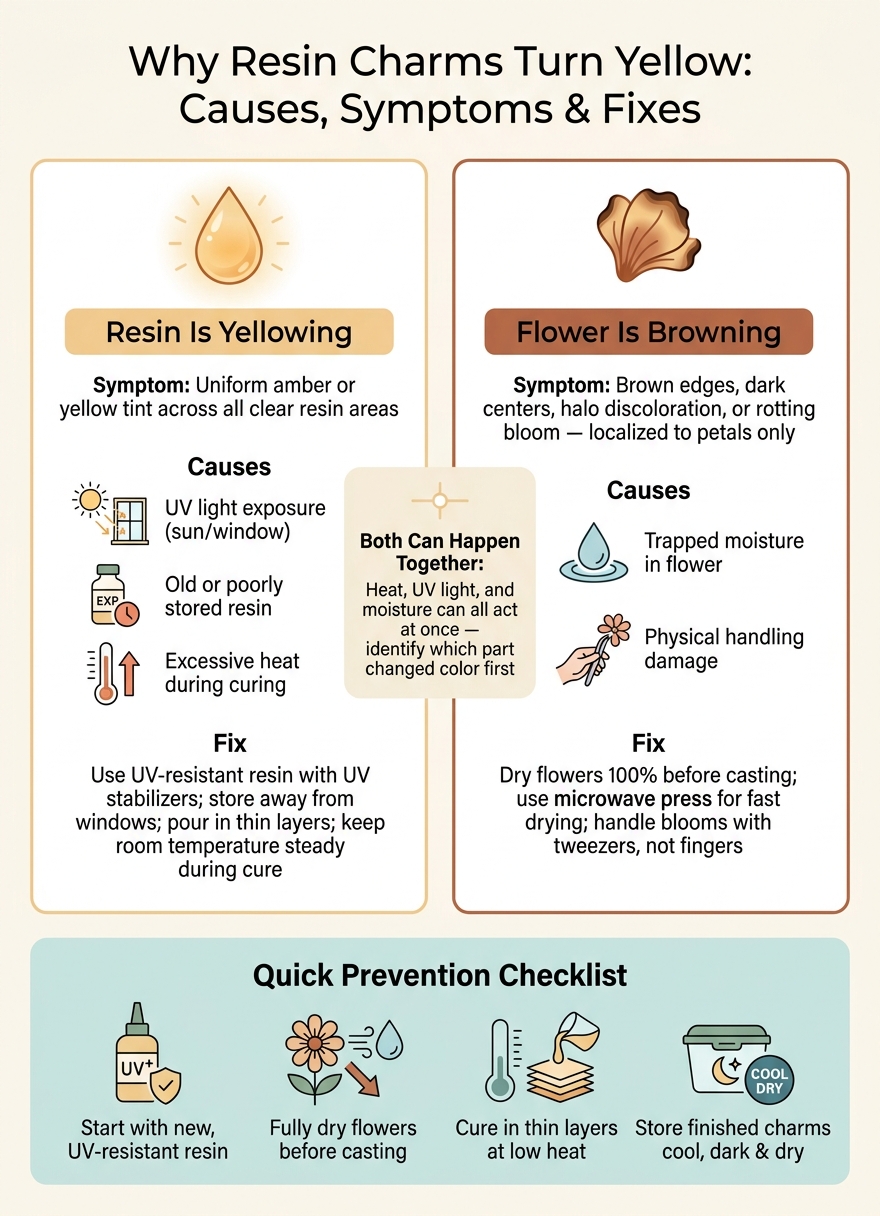
Why Resin Charms Turn Yellow: Causes, Symptoms & Fixes
Before you try to fix anything, figure out what is changing color in the first place.
Signs of Resin Yellowing vs. Flower Damage
The easiest way to spot the problem is to look at where the color change shows up.
If the clear parts of the charm have an even amber or yellow cast, the resin itself is usually the issue. Resin without UV inhibitors tends to yellow faster, and that can stand out even more next to light-colored flowers.
If the color change stays on the petals, along the edges, or shows up like a halo around the bloom, you’re likely dealing with flower damage instead. Flowers that aren’t fully dry can rot and turn brown after they’re cast in resin.
Symptom Table for Common Yellowing Problems
| Visible Symptom | Likely Cause | Where It Commonly Occurs | Practical Response |
|---|---|---|---|
| Uniform amber or yellow tint | UV exposure or resin without UV inhibitors | Throughout all clear resin areas | Switch to a clear epoxy resin with UV inhibitors; store away from windows |
| Brown edges or rotting bloom | Leftover moisture in the flower | Petals and flower centers | Make sure flowers are 100% dry before embedding |
| Dark spots | Physical damage to petals during handling | Specific spots on the flower surface | Handle blooms with tweezers, not fingers |
| Discoloration that appeared during curing | Excessive heat while curing | Throughout the piece | Reduce curing time or use a lower-wattage UV lamp |
Once you know whether the resin or the flower changed color, it’s much easier to pick the right drying, curing, and resin setup.
Choose Better Materials and Cure Resin With Less Heat
Start with a UV-resistant resin that includes UV stabilizers. Resin without them tends to yellow sooner, especially around light-colored flowers. And even if you pick the right resin, heat during curing can still cause trouble.
For thin charms, use fast-curing UV resin. For thicker pieces, go with slow-curing deep-pour epoxy. A slower cure helps keep heat down and can cut back on trapped bubbles.
Flower prep matters just as much as resin choice. Flowers need to be fully dry before casting. Any trapped moisture can lead to browning, mold, and a cloudy, translucent look. Microfleur microwave flower press kits can dry flowers in minutes, which helps hold color before petals have time to dull or brown.
Resin Condition Comparison Before You Start
Use this quick check before you pour:
| Resin Type | Clarity & Yellowing Risk | Storage Considerations |
|---|---|---|
| New UV-Resistant Resin | Crystal clear; lowest yellowing risk thanks to UV stabilizers | Store in a cool, dark place; use within shelf life |
| Old, Poorly Stored Resin | May look darkened or thickened; high yellowing risk | Avoid if it shows any amber tint in the bottle |
If your resin already looks darkened or thickened before you mix it, don’t use it. That’s usually a sign it’s past its prime.
Control Curing Heat and Mixing Errors
Mix with care and stick closely to the resin directions so the piece cures evenly. With UV resin, pour in thin layers instead of one thick layer. That helps the resin cure more evenly and keeps the chance of overheating lower. If you need to remove bubbles, use a quick pass of heat, then stop. Too much heat can do more harm than good.
For deep pours, keep the room temperature steady while the resin cures. That can help stop it from curing too fast or cracking.
After curing, storage is your next line of defense against yellowing.
How to Store and Display Resin Charms to Slow Yellowing
After curing, storage is the last thing that affects how fast yellowing shows up.
Best Storage Conditions for Finished Charms
Keep finished charms in a cool, dry, dark place. Keep finished charms out of direct light to slow yellowing.
Heat is another big issue. Avoid heat and temperature swings. Don’t leave charms near radiators, heat vents, or on car dashboards.
Also, store only fully cured charms. Leftover moisture can cloud the surface.
Those habits matter most once the charm is finished.
Conclusion: Steps That Help Most
Storage can slow yellowing, but it can’t stop it. Here’s the short version of what helps most after casting:
- Keep charms out of direct light during display and storage
- Avoid heat and temperature swings
- Store finished charms in a cool, dark, dry spot away from sunlight and heat sources
These habits slow yellowing; they do not prevent it.
FAQs
Can yellowed resin charms be fixed?
Unfortunately, no. Once resin turns yellow, you can’t undo it. The color change happens because of a permanent chemical shift in the resin itself.
Your best bet is to stop yellowing before it starts. That means using high-quality, non-yellowing resin with UV inhibitors, making sure your flowers are fully dry, and keeping finished charms out of direct sunlight.
How can I tell if my flowers are dry enough?
Your flowers need to be completely dry before they go into resin. If any moisture is left, it can lead to rot and fading.
When flowers aren’t fully dry, you may notice dark or damp-looking spots once they’re sealed in the resin. To avoid that, keep dried flowers in an airtight container until you’re ready to use them, so they don’t pull moisture back in from the air.
Does all resin yellow over time?
No. Many standard resins can yellow or fade over time, especially if they don’t have UV inhibitors.
That said, high-quality, UV-resistant formulas are made to slow down that color shift. If you want your pressed flower pieces to stay clear and hold up well, using a non-yellowing resin - like Hand Crafter LED UV Resin available at Microfleur - can make a big difference.





















