










If I had to boil this down to one point, it’s this: dry flowers all the way, pour resin in layers, and keep finished coasters away from heat and sun.
Most coaster problems come from moisture, thick pours, or rough care. Even a small amount of trapped water can make resin look cloudy, add bubbles, or lead to browning later. And while some flowers can dry in about 1.5 to 3 minutes in a microwave flower press, book pressing can take weeks.
Here’s the article in plain English:
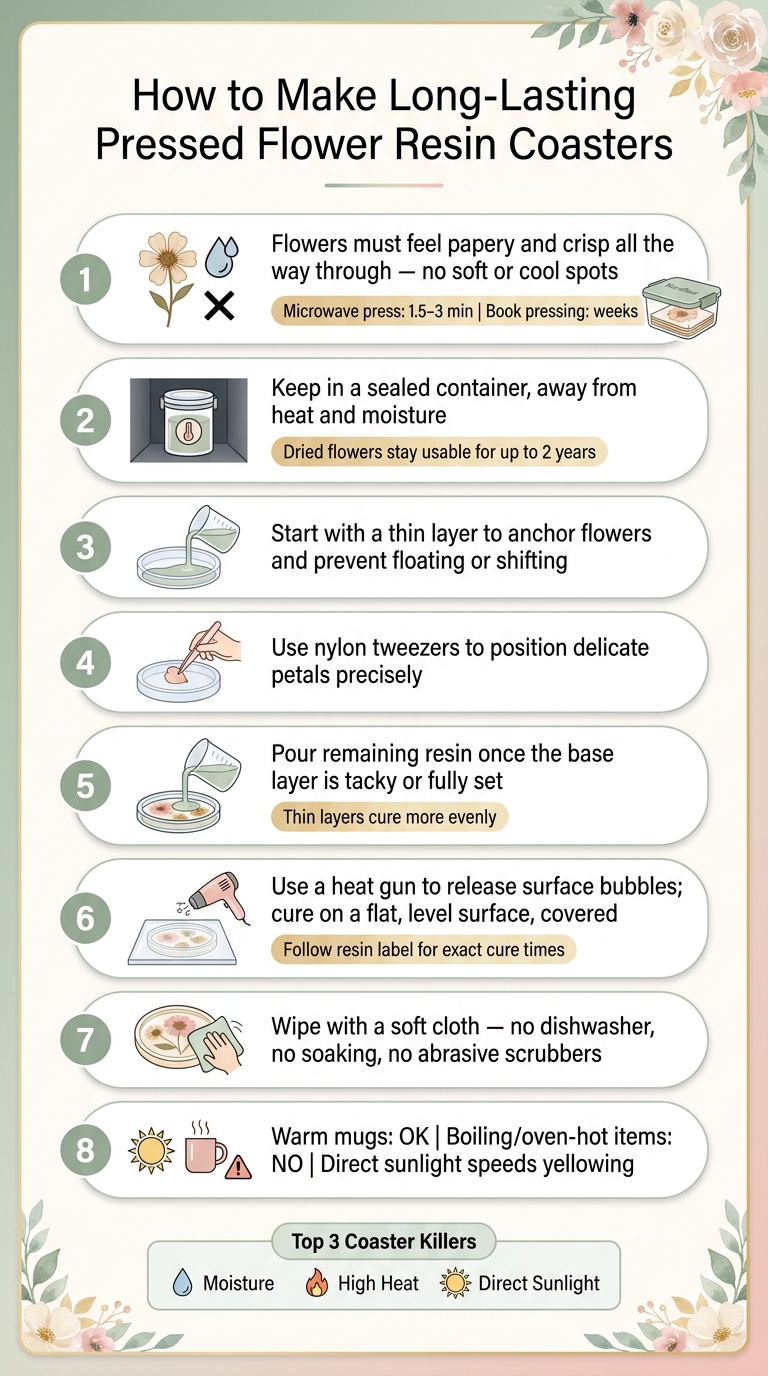
- Flowers must feel papery and crisp before they go into resin
- Any moisture left inside can cloud the resin or damage the flowers over time
- Thin layers cure better and help stop flowers from floating or shifting
- Cure time depends on the resin, so I’d follow the label and keep molds level and covered
- Cleaning should stay gentle: soft cloth, little water, no dishwasher, no soaking
- Heat matters: warm mugs are usually fine, but boiling or oven-hot items can mark or soften the surface
- Sun speeds yellowing, so dark, dry storage helps coasters last longer
- Dried flowers can stay usable for up to 2 years if stored well
If you want coaster resin work to last, the small prep steps do most of the work. Drying, layering, curing, and storage make the biggest difference.
How to Make Pressed Flower Resin Coasters: Step-by-Step Guide
Pressed Flower Resin Coasters for Beginners
sbb-itb-80d8183
Resin coaster basics
Pressed flower coasters need to stand up to condensation, heat, and lots of hands-on use. So this isn’t just about making something pretty. The materials and prep have to support both the look and the life span of the coaster.
Supplies you need for coaster projects
Starting with the right supplies saves a lot of hassle later. Here’s what you’ll want on hand:
| Supply | Purpose |
|---|---|
| Fully pressed and dried flowers | The botanical element; must be completely moisture-free before casting |
| Two-part epoxy resin | Provides the durable, glossy body suited to coaster molds |
| Silicone coaster molds | Defines the shape and releases cleanly once cured |
| Nylon tweezers | Lets you place delicate petals precisely without damaging them |
| Heat gun | Helps release air bubbles from the resin surface |
The most important item isn’t the mold or even the resin. It’s fully dried flowers.
Two-part epoxy is often the go-to for coasters because it works well in larger molds and usually offers high clarity and resistance to yellowing. If you want to dry flowers faster, a microwave flower press like the ones from Microfleur can help speed things up and hold onto more color for resin work.
Why coasters need more care than decorative pieces
A framed resin piece usually just sits there. A coaster doesn’t get that easy life. It gets picked up, set down, splashed with drink condensation, and sometimes asked to hold a hot mug. That daily wear is why flower dryness, resin thickness, and aftercare matter more here than in many floral resin projects.
Even a tiny bit of trapped moisture can turn resin cloudy or cause petals to break down over time. Coasters also deal with more contact and more surface wear than decorative pieces, so prep matters more than many people expect. It all starts with flowers that are fully dry before casting.
Drying flowers for resin
Drying time depends on three main things: bloom thickness, petal density, and humidity. Thin blooms dry a lot faster than thick or layered flowers. And in humid summer weather, the process can drag on, even when the petals look flat and seem dry at first glance.
How dry flowers should feel before casting
Before you cast them, flowers should feel papery and crisp all the way through. You shouldn't notice any cool, soft, or bendy spots.
If you're using a microwave flower press - like those from Microfleur - short bursts of around 25 seconds can dry flowers in as little as 1.5 to 3 minutes. Book pressing or air drying can take weeks, and those methods usually lead to more color loss. Following specific flower pressing tips can help preserve those vibrant hues.
Why pressed flowers work better than fresh flowers in resin
Fresh flowers still hold moisture, and that's where the trouble starts. Once you cast a fresh bloom in resin, that water has nowhere to go. The result? Cloudy resin, trapped bubbles around the petals, and browning or decay inside the cured piece over time.
Pressed flowers work better because they're fully dried first. With the moisture gone, they're much more stable inside resin and far less likely to cause those issues.
How to store dried flowers before use
Once your flowers pass the crispness test, store them in a sealed container or between clean paper sheets in a dry, dark place away from heat and moisture. Stored this way, dried flower petals can stay usable for resin projects for up to two years.
After drying, the next thing to watch for is trapped moisture inside the resin.
Moisture, resin depth, and curing
What moisture does inside cured resin
Once flowers are dry, the next problem is leftover moisture getting sealed into the resin. Even a tiny bit can turn a clear pour cloudy and leave water spots. Water can also weaken the finish and get in the way of proper curing and clarity. And with thicker blooms, bubbles can get trapped around the petals, which makes the final piece look less clean.
How deep to pour resin in coaster molds
After you control moisture, pour depth matters just as much. Start with a thin base layer from a customizable resin kit to hold the flowers in place. That first layer helps stop them from floating, shifting, or sinking. Then pour the rest of the resin after the first layer is tacky or fully set.
"Thin resin layers cure more evenly and keep flowers from shifting or floating." - Microfleur
How long curing takes
Curing time depends on the resin formula and the conditions in your workspace, so there isn't one set timeline. Follow the directions on the package. It also helps to cure coasters on a flat, level surface and keep the mold covered so dust and pet hair don't land in the resin.
Cleaning, heat limits, yellowing, and storage
Once the coaster has fully cured, upkeep is pretty simple: clean it gently, keep it away from high heat, and store it out of the sun.
How to clean resin flower coasters safely
Cured epoxy resin forms a glossy, protective surface, so light cleaning is usually all you need. Wipe the coasters with a soft, dry cloth or a slightly damp one.
Stay away from dishwashers, long soaks in water, harsh chemical cleaners, and abrasive scrubbers. Those can dull the finish, leave scratches, and wear down the resin.
How much heat resin coasters can handle
Heat is the next thing to watch, since mugs and cups put the most stress on resin coasters.
Resin coasters can handle warm coffee or tea mugs, but they are not made for high heat. Don’t place boiling vessels, hot pans, or oven-hot items on the surface. Too much heat can soften the resin, warp it, or leave marks that don’t go away. And yes, this part matters: never use the coaster before it has fully cured.
How to slow yellowing and store coasters long term
Epoxy resin yellows over time, especially when it sits in direct sunlight. UV stabilizers can slow that process.
If you’re storing coasters for a season or just not using them for a while, keep them flat in a cool, dry, dark place. That helps protect both clarity and color. It’s also smart not to stack heavy items on top, since pressure can leave dents or bend the shape over time.
Conclusion
Pressed flower coasters hold up best when the flowers are fully dry. If any moisture is left, the resin can turn cloudy, brown, or even rot over time. Once the flowers are ready, thin resin layers help keep them in place and let the resin cure more evenly. This technique also works well for pressed flower resin keychains if you want to try a smaller project.
After curing, gentle cleaning and keeping the coasters away from high heat help protect the surface. Microfleur press kits can also speed up the drying process while helping flowers keep their color.
The small things matter here: patient drying, careful casting, and giving the resin time to cure. That’s what separates a fragile coaster from one that lasts.
FAQs
How can I tell if a flower is too moist for resin?
If a flower has any moisture left, it’s still too wet for resin. Flowers need to be completely dry before you embed them. If they aren’t, they can rot, fade, or shift over time.
A Microfleur microwave flower press can help pull out moisture while helping the color stay in place. Before you add resin, double-check that your flowers are fully dry, because resin and water don’t mix well.
What should I do if bubbles keep forming around the flowers?
Make sure the flowers are fully dry before you use them. Any moisture can create bubbles, and those bubbles often gather around petals and along the edges of the mold during the pour.
After pouring, gently run a heat gun or torch over the resin surface to help release trapped air. Go slowly and don’t overheat the resin.
Then keep an eye on the piece for the next 15 to 30 minutes. If new bubbles rise, pop them and continue checking until they stop showing up.
How long do pressed flower resin coasters usually last?
When they’re made the right way - with high-quality, non-yellowing resin and fully dried flowers - pressed flower coasters can last for years.
The big thing is moisture. If the flowers aren’t completely dry before you embed them, they can start to decay over time. Dry flowers help the resin cure around them cleanly, which gives you a hard, protective surface. And if you use proper preservation methods, the flowers can hold their color much longer, too.





















