










If you want pressed flowers that keep their shape and color, pick blooms that are flat, thin, and not too wet. In most cases, the easiest options are pansies, violas, daisies, cosmos, larkspur, Queen Anne’s lace, small roses, and rose petals.
Here’s the short version:
- Best flowers to press: pansies, violas, daisies, cosmos, larkspur, Queen Anne’s lace, small roses, and rose petals
- What works best: thin petals, flat faces, simple centers, and low moisture
- What to avoid first: peonies, full roses, carnations, tulips, lilies, succulents, zinnias, and marigolds
- Best time to pick: after morning dew dries, before the heat makes blooms droop
- Fast method: a microwave press can dry thin flowers in about 30 seconds to 3 minutes
- Best beginner picks: pansies, violas, daisies, and cosmos
A simple rule I’d use: if the flower feels flat and light, it will usually press well. If it feels thick in the center or heavy with water, it can brown, wrinkle, or mold.
Quick Comparison
| Flower | Ease of Pressing | Main Reason It Works | Watch Out For |
|---|---|---|---|
| Pansies | Easy | Flat face, thin petals | Press when dry |
| Violas | Easy | Small, even drying | Leave space between blooms |
| Daisies | Easy to medium | Flat petal shape | Thick center dries slower |
| Cosmos | Easy | Thin petals, open bloom | Arrange petals before pressing |
| Larkspur | Medium | Thin florets | Press florets, not full spike |
| Queen Anne’s lace | Medium | Light, airy shape | Press in small pieces |
| Small roses | Medium | Less bulk than full roses | Side press if still thick |
| Rose petals | Easy | Thin and simple | Keep space between petals |
| Peonies / full roses | Hard | Too many layers | Browning and uneven drying |
| Tulips / lilies | Hard | High moisture | Mold risk |
| Zinnias / marigolds | Hard | Thick centers | Damp centers can spoil results |
So if you want clean results on your first try, I’d start with the flat blooms and skip the dense ones.
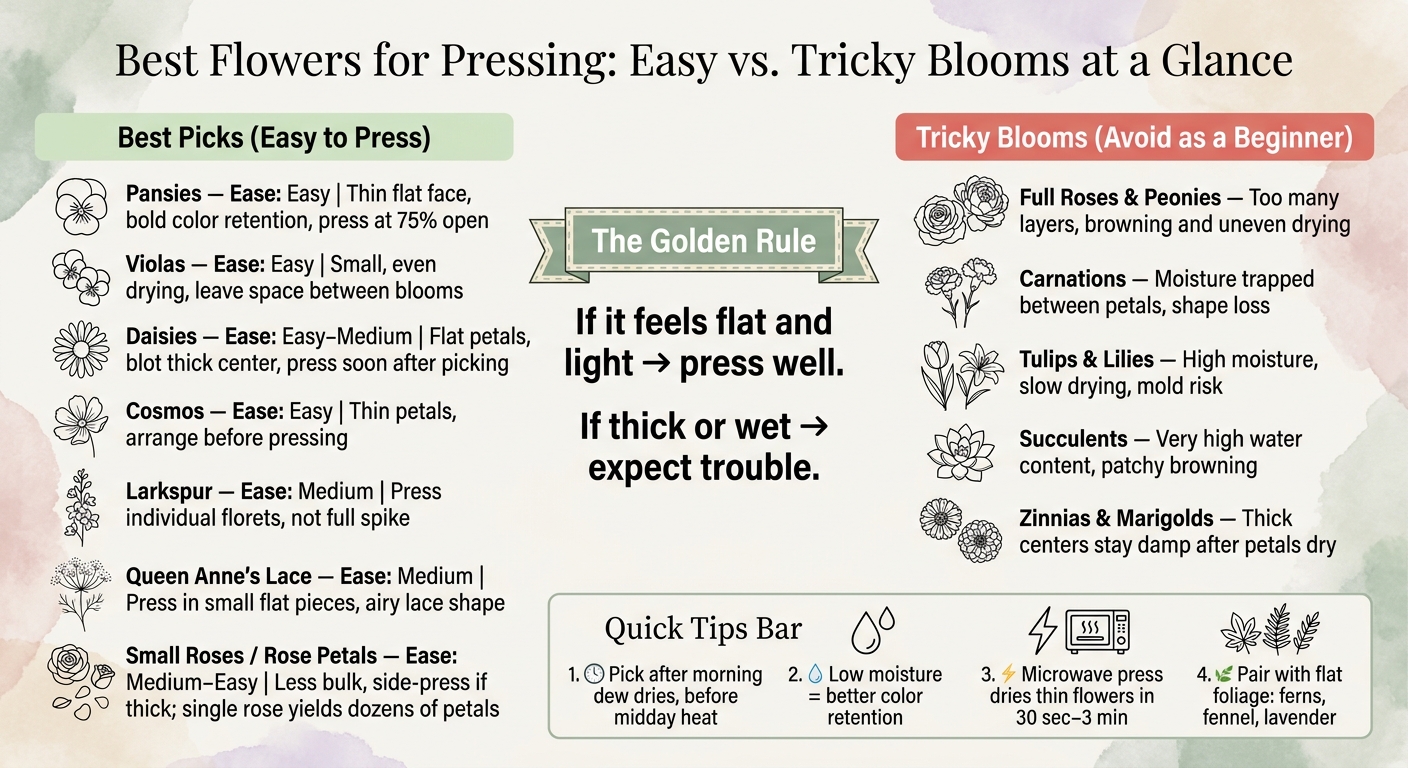
Best Flowers for Pressing: Easy vs. Tricky Blooms at a Glance
Pick the Best Flowers to Press
sbb-itb-80d8183
What Makes a Flower Press Well
The flowers that press best tend to have the same basic features: a flat shape, thin petals, simple centers, and low moisture.
Moisture is the biggest problem. Wet blooms take longer to dry, and they’re more likely to turn brown or grow mold.
Bulky centers can cause uneven pressure. That often leaves flowers wrinkled or misshapen. So, in most cases, simple blooms press more cleanly than dense ones.
Condition matters just as much as structure. Fresh flaws stay visible after pressing. Pick blooms that are fully open and free of damage.
Press them soon after cutting to help hold their color. Those traits are why the flowers below tend to press so well.
Tools That Speed Up Flower Pressing
A microwave flower press can dry blooms in just a few minutes while helping them hold their shape and color. Microfleur's press, for example, dries flowers under pressure in minutes, which helps blooms keep more of their original color. That’s a big reason the flowers below work so well with this method.
Pansies, violas, daisies, and cosmos are especially well suited to microwave pressing because they dry fast and evenly. From there, it helps to look at choosing and preparing flowers that press most reliably.
1. Pansies
Pansies are almost made for pressing. Their flat faces and thin petals dry evenly, so they’re one of the easiest flowers to work with and they usually keep their shape well.
Their biggest plus is color retention. Purple and yellow pansies tend to stay bold after drying, and their petal markings are still easy to see. That’s a big reason pressed pansies work so well in greeting cards, bookmarks, and journal pages.
Pick pansies when they’re about 75% open, after the dew dries and before the heat of the day. If the flowers are damp, let them dry all the way before pressing. Use tweezers to flatten them gently, then press them on parchment paper or coffee filters so you don’t get texture marks.
That mix of easy handling, strong color, and clear petal detail makes pansies a solid first choice for pressed flower projects.
2. Violas
After pansies, violas are one of the easiest flowers to press. They flatten well, keep their shape, and dry fast without much fuss. That even drying is a big plus, especially if you want a clean result without a lot of trial and error.
Give each viola a little room in the flower press so trapped moisture can escape. That small gap helps cut down the chance of mold.
Violas also tend to hold their color and shape well after pressing, which makes them a dependable pick for pressed flower projects. Only press blooms that are fully fresh and free of damage. Before you close the press, use tweezers to place the petals the way you want them. Once the press is shut, they’re tough to fix.
That makes violas a solid choice for neat, fast presses.
3. Daisies
Like pansies and violas, daisies are easy to press because they sit fairly flat. Types like the Shasta daisy tend to work especially well. Their petals spread out nicely, and the flower usually keeps its shape under pressure without much fuss.
One thing to watch for: daisies can lose color over time once framed. So the bloom will usually look its best earlier on.
The flower center is the tricky part. It dries more slowly than the petals, which can lead to uneven results. To help with that, blot both sides with absorbent, acid-free paper and leave a bit of extra room around the bloom so it can dry more evenly. You can also remove extra inner petals or any thick bits so the flower rests flatter. If needed, trim bulky sections with a craft knife if they won’t be part of the final design.
Using microwave flower pressing kits, press daisies soon after picking, once they’re fully free of dew or surface moisture.
If you want another flat bloom with a different look, cosmos are the next strong choice.
4. Cosmos
Cosmos are one of the easier flowers to press. Their thin petals and wide, open blooms flatten nicely, which makes the whole process pretty simple with a flower press kit. The tricky part comes right at the start: getting the petals into place before you press them.
They also tend to hold their color well, although light will fade them over time.
Set the petals where you want them before pressing, because once the flower is flat and dry, it’s tough to move anything around without damage. Tweezers or a pointed tool can help with small adjustments. It also helps to leave a little space around each bloom so they dry more evenly.
5. Larkspur
Like cosmos, larkspur has a soft, delicate shape. But there’s one catch: the spike should be broken down into individual florets before you press it. The full stem carries too much moisture, so it doesn’t press as cleanly.
Pull the florets off the spike and press them one by one. They dry faster, flatten better, and do a better job of keeping that light, airy shape. You can press each floret fully open for a face-on look, or turn it on its side if you want a side profile.
Larkspur also keeps its color well. Its thin petals tend to stay bright, which makes it a strong pick for botanical art projects. If you want another delicate flower to try, Queen Anne's lace is next.
6. Queen Anne's Lace
Like larkspur, Queen Anne's lace is delicate, so it works best when you press it in small, flat pieces. Its light, airy shape tends to lie flat and keep that lace-like outline, which is a big part of its charm. Set it in place before you close the flower press, because once it’s compressed, moving it is tricky.
It also holds its color well at first. Use tweezers or a pointed tool to place it on the paper, and leave a little space around it so it can dry evenly.
Make sure the flower is fresh and free of dew before pressing to help prevent spoilage. If you want something fuller that still presses neatly, small roses are the next good choice.
7. Small Roses
Small roses and rosebuds are easier to press than full-size roses. They have less bulk, so they flatten more evenly.
They follow the same pattern as the other blooms in this guide: thin, flat, and low in moisture. If a flower still feels too full, press the petals on their own.
Pick small, young roses that are fresh, dry, and free of bruising.
If the bloom still seems too thick, press it from the side. That helps keep its shape without all the extra bulk. If it still feels too full, press the petals separately.
8. Rose Petals
Pressing a whole rose can be a bit of a project. Individual petals are much easier. They’re thin, flat, and simple to work with, so they give you that soft, delicate look without the extra bulk of a full bloom.
They also tend to dry faster and hold their color better than an entire rose.
Start with fresh roses that don’t have damage. Bruises and cracks will still show after pressing. It’s best to pick them once the morning dew has dried. When you place the petals in the press, leave a little room between each one so the moisture can escape at an even pace.
A single rose can give you dozens of pressed petals, which makes them handy for all kinds of projects. If you use a microwave flower press, thin petals can dry in as little as 30 seconds to 3 minutes. They also pair nicely with thin foliage in mixed designs.
Foliage That Pairs Well With Pressed Flowers
Greenery helps pull a pressed arrangement together. It adds depth, fills empty spots, and gives blooms a clean frame. The goal is simple: let the foliage support the flowers, not steal the show.
Ferns are the easiest choice for beginners: flat fronds that dry cleanly. Their fronds look especially nice around blooms like pansies or daisies.
Fennel and yarrow bring a light, feathery texture and usually press well. Lavender and seasonal leaves add texture, color, and a bit of warm contrast. For fall projects, seasonal leaves can bring warm color and contrast to pressed arrangements.
A few handling tips make a big difference:
- Pick foliage only when it’s fully dry.
- Trim off thick stems so each piece can lie flat.
- Use tweezers to place delicate fronds without shifting the rest of the design.
- Leave a little space between pieces so moisture can escape.
If you want to move faster, a microwave press can dry foliage in minutes, depending on thickness.
Even if your foliage works well, some blooms are still too thick or too wet to press neatly.
Flowers Beginners Should Avoid
Not every flower presses well. The flowers above tend to work with fewer headaches; these are the ones beginners should leave alone at first.
Full roses, peonies, and layered carnations hold moisture between their petals. That often leads to browning or petals that lose their shape. If you still want to try them, thin out the hidden petals and press those pieces separately.
Some flowers run into the same issue: they simply carry too much moisture. Tulips and lilies are hard to press because their fleshy petals dry slowly and can mold.
Succulents are even tougher. They hold a lot of water, so they often brown or dry in patchy ways. Zinnias and marigolds can be hard too, especially when their thick centers stay damp after the petals have already dried.
A simple rule helps here: if a flower feels thick or dense in the center before you pick it, it may give you trouble in the press. Flat flowers with thin petals usually give cleaner results.
Next, compare the easiest blooms against the trickiest ones.
Best Picks vs. Tricky Blooms: A Quick Comparison
The easiest flowers to press usually share two traits: thin petals and low moisture. That simple rule helps you sort the easy wins from the flowers that can turn into a headache.
| Feature | Representative Best Picks (Pansies, Violas, Daisies, Cosmos, Larkspur, Queen Anne's Lace, Small Roses/Rose Petals) | Tricky Blooms (Full Roses, Peonies, Tulips, Zinnias, Marigolds) |
|---|---|---|
| Petal Thickness | Thin, delicate, and usually single-layered | Thick, fleshy, or multi-layered |
| Moisture Level | Low; dries quickly with less risk of rot | High; more likely to trap moisture and mold |
| Browning Risk | Low; colors tend to stay vibrant | High; centers and dense petals often brown first |
| Shape Retention | Naturally flat; easy to arrange | Bulky or 3D; often needs thinning or cutting to lie flat |
| Pressing Difficulty | Easy; minimal prep needed | More advanced; often needs extra monitoring and paper changes |
Think of it as a quick gut check. If a bloom is flat, light, and not too wet, it will usually press well. If it’s thick, packed with petals, or holds a lot of water, expect more prep and closer attention.
Use this comparison as a quick filter before your final choice.
Conclusion
Flat flowers with thin petals and low moisture tend to press best. Good starter picks include pansies, violas, daisies, and cosmos. Choose fresh blooms that don't have cracks or spots, because those flaws will show up in the final pressed flower.
It also helps to make sure the flowers are fully dry before pressing and to check them closely for damage. The better the flower you start with, the better the color, shape, and final result will be. Once you have your blooms, you can start on various pressed flower projects to showcase your work.
FAQs
How long should pressed flowers dry?
Leave pressed flowers in the press until both the paper and the blooms are fully dry. That usually takes 2 to 4 weeks, and in many cases 4 to 6 weeks.
Only take them out when they feel stiff, crisp, and easy to lift from the page. If they still feel pliable or stick to the paper, give them more time.
How can I help pressed flowers keep their color?
Start with fresh flowers that have just opened. Pick them on a dry day, after the morning dew has dried off. Older blooms often lose more color, so they usually don't press as well.
Dry the flowers as soon as you can to help keep their color. A microwave press can dry flowers in just a few minutes. Once you're done, store the pressed pieces in airtight containers with desiccant packs. And use fresh, high-quality flowers from the start, because any spots, bruises, or other flaws will still show after pressing.
Can I press flowers with thick centers?
It’s usually not the best option. Flowers with thick, dense centers are harder to press, and they can leave marks behind.
With blooms like roses and sunflowers, beginners will usually do better if they take the flower apart and press the petals one by one. For better results, start with flowers that are lighter and flatter, and keep moisture low.





















