










If you want the easiest first win, I’d pick a microwave press kit. It can dry flowers in 60 to 90 seconds or a few minutes, while book pressing often takes 4 to 6 weeks. That means I can see mistakes fast, fix them fast, and keep more color in many cases.
Here’s the short version:
- Microwave press kit: best if you want fast results, better color hold, and less waiting
- Book pressing: best if you want the lowest startup cost and don’t mind a long wait
- Main things to compare: time, color, cleanup, space, and first-try results
- Beginner tip: thin flowers like pansies and violas are easier to press than thick blooms like roses
- Watch-out: microwave pressing can scorch petals if I use too much heat; book pressing can brown or mold if paper stays damp
Microwave vs Press vs Book | Which Dries Flowers Best?
sbb-itb-80d8183
Quick Comparison
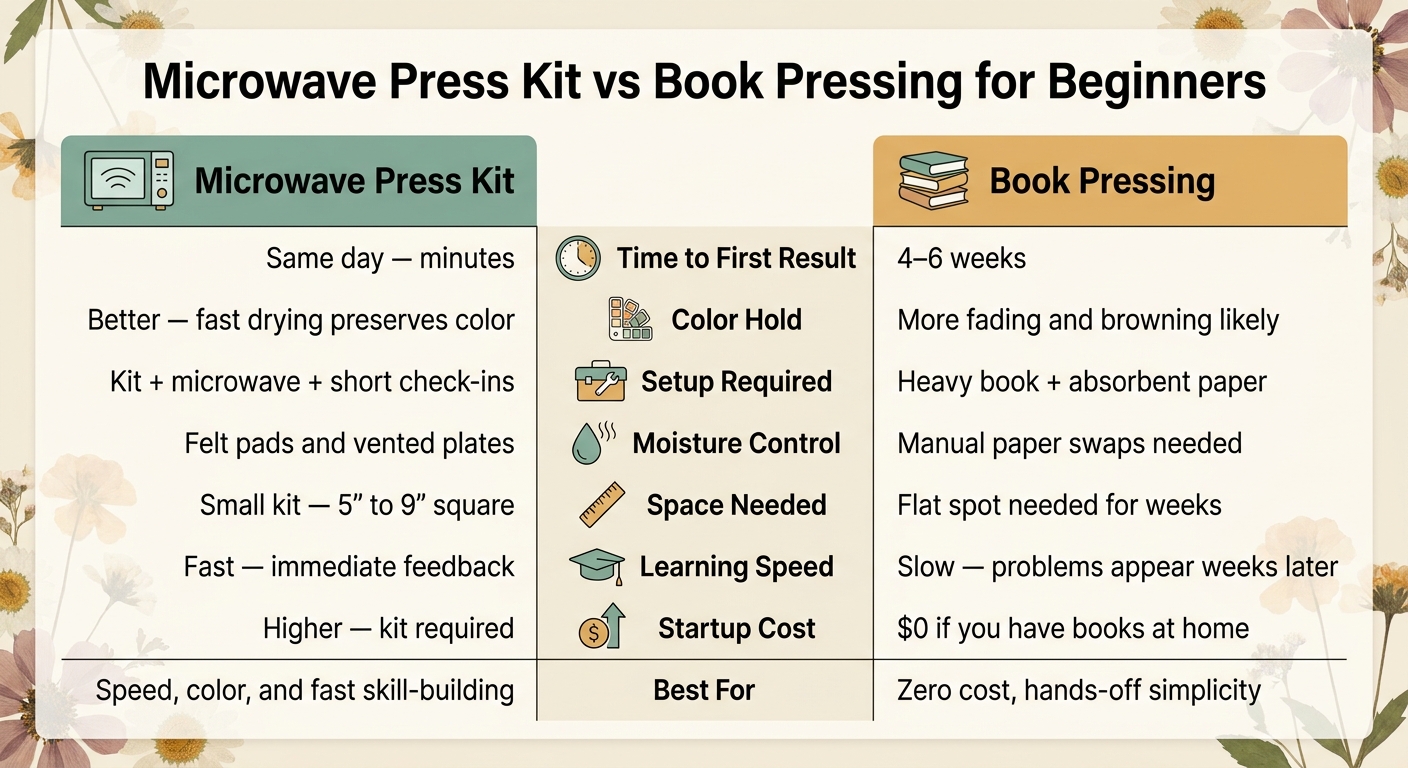
Microwave Press Kit vs Book Pressing: Beginner Comparison
| What to compare | Microwave press kit | Book pressing |
|---|---|---|
| Time to first result | Same day, often in minutes | Usually 4–6 weeks |
| Color retention | Often better because drying is fast | More fading and browning can happen |
| Setup | Kit + microwave + short check-ins | Heavy book + absorbent paper |
| Moisture control | Felt pads and vented plates help move moisture out | Moisture can sit in the paper if I don’t change it |
| Space | Small kit, often about 5" to 9" square | Books or a press take up room for weeks |
| First-try learning | Fast, because feedback comes right away | Slow, because problems may show up much later |
| Cost to start | Higher than book pressing | Often about $0 if I use items at home |
To put it simply: I’d use a microwave press kit for speed and color, and book pressing for low cost and a hands-off setup. If I have a deadline, the choice is easy. If I just want to start with what I already own, a heavy book works. For those just starting out, these flower pressing tips for beginners can help ensure success.
Microwave press kit for beginners: faster results with active monitoring
A microwave press kit can speed things up a lot. But the trick is simple: use short bursts of heat and check often.
Start by choosing and preparing flowers that are fully dry on the outside. No dew. No rain. No surface moisture. Set one ventilated platen on a flat surface, then add a wool felt pad and a cotton liner. Place the flowers in a single layer on the cotton. Make sure the petals don’t touch or overlap. That one step helps a lot, because it lets heat and moisture move out more evenly. Then add the second cotton liner, the second felt pad, and the top platen. Secure the press with the clips.
Heat the press in short 20- to 30-second bursts instead of one long microwave cycle. After each burst, open the press and wipe moisture off the platens. The felt pads can get damp too, so let them dry between batches. Most batches are done in a few minutes, though the exact time depends on microwave wattage and flower thickness. Start with the timing guide from the manufacturer, then adjust as needed. Let the flowers cool fully in the closed press before you open it. Microwave wattage can vary a lot, so a time that works in one machine may scorch flowers in another. Thin, flat flowers like pansies or violas are a smart place to start while you learn how your microwave behaves.
Where microwave press kits give beginners the most help
The big win here is fast feedback. You don’t have to wait days or weeks to see what happened. In just a few minutes, you can tell if your timing was off, if the flowers were too thick, or if they needed a bit more heat. That makes it much easier to adjust from batch to batch. Book pressing can’t do that. With a compact kit, a beginner can run several practice rounds in one afternoon and build skill much faster.
What happens when flowers get too much heat
The downside of microwave speed is pretty clear: flowers can overheat fast. When that happens, you may see dark edges, curled petals, or flowers that turn brittle. The fix is straightforward: go by feel, not just the timer. A properly pressed flower should feel dry and papery. It should not feel crispy or so stiff that it snaps. If the press feels too hot, let it cool before the next cycle. Starting with thin flowers is the easiest way to learn the right timing for your own microwave.
Book pressing for beginners: low equipment cost, slower learning cycle
Book pressing is slow, but it’s about as simple as flower pressing gets. You don’t need much: a heavy hardcover book or a stack of books, absorbent paper, and a dry spot where everything can sit untouched. If you already have those at home, your cost can be close to $0.
Here’s the basic setup: place the flower between two sheets of absorbent paper, adjust the petals with tweezers, then close the book. Add more books or other heavy items on top if you want extra pressure. Thin flowers can dry in about a week, but most take 4 to 6 weeks.
How to reduce browning, damp paper, and mold in a book press
The big problem with book pressing is moisture getting trapped. If the paper feels damp after a few days, swap it out for clean, dry absorbent sheets. That one small step can make a big difference.
Skip glossy magazine paper. It doesn’t soak up moisture well, which can leave flowers wet for too long and lead to rot. It also helps to start with flowers that were picked fresh but are fully dry, with no dew or rain on them. For thicker blooms, trim off bulky backs or hidden parts so the flower can lie flatter and dry faster.
When the flowers feel papery, they’re ready to store or use.
Why book pressing is harder for impatient first-time users
The hard part isn’t the setup. It’s the wait.
Book pressing has a slow feedback cycle. If petals shift, if the flower was a little damp, or if the bloom was too thick, you may not notice the problem for days or even weeks. That makes it tougher to learn fast, especially for first-time users who want to fix mistakes right away.
That slow feedback is the main downside when beginners stack book pressing up against microwave flower pressing.
Microwave press kit vs. book press: time, color, mess, space, and first results compared
Once you get past the step-by-step part, this is what most beginners want to know: which method gives you the easiest first win? The main things to compare are speed, color, cleanup, space, and what your first batch is likely to look like.
Time, color hold, and how fast beginners can improve
For beginners, speed matters more than people think. It affects confidence, and it affects how fast you learn.
Microwave pressing takes minutes. Book pressing takes days or even weeks. That gap changes the whole experience. If a flower scorches in the microwave or dries unevenly, you find out almost at once and can fix your approach on the next try. With book pressing, you might wait weeks only to open the pages and find browning or mold.
Color works much the same way. Faster drying usually helps flowers keep more of their color, and it gives beginners quicker feedback on what worked and what didn't. Of course, the result still depends on the flower itself, how fresh it was when you pressed it, and whether it had surface moisture on it. Flat flowers like pansies and violas tend to be easier to press well, while thicker blooms like roses need more care no matter which method you pick.
That day-to-day difference stands out even more if you're working in a small home craft area.
Ease, mess, and storage space in a home craft setup
Neither method is totally mess-free. Microwave pressing usually leaves you with damp pads and some condensation that need to dry between cycles. Book pressing has its own upkeep too, since you need to swap out absorbent paper from time to time to help stop mold.
Space is where the gap gets more obvious. A microwave press kit is small enough to slide into a drawer or sit on a shelf with the rest of your craft supplies when you're finished. Book pressing needs a flat spot that can stay untouched for weeks. In a small apartment or a shared home, that can be a pain.
Put side by side, the trade-offs are pretty clear. Microwave pressing gives you faster feedback, better color hold, and takes up less room. Book pressing is cheaper to start and doesn't ask for any special gear beyond what most people already have at home. For those ready to start with the faster method, a microwave flower pressing starter bundle includes everything needed to begin.
Conclusion: Which method fits a beginner best
After looking at time, color, cleanup, and space, the best pick depends on your first goal. Go with a microwave press kit if you want speed, better color, and a shorter learning curve. Go with book pressing if you want the lowest-cost, hands-off way to begin.
Match the method to the project you want to finish first.
Choosing based on your first project goals
Start by thinking about what your first project will actually be.
If speed matters, or you want test results right away, a microwave press kit lines up with that goal. You get results in minutes, which means fast feedback and less guessing.
If you want the simplest, lowest-cost start, book pressing works well because you can use what you already have at home. Heavy books and absorbent paper are a solid way to begin.
Put plainly: if your first project has a deadline, or you have a flower you care about keeping in good shape, a microwave press kit gives you more control from the start. If you want the easiest way to begin and don't mind waiting, book pressing is a good place to start. Choose microwave pressing for speed and color. Choose book pressing for simplicity and zero extra cost.
FAQs
Which flowers are easiest for beginners to press first?
For beginners, naturally flat flowers are the easiest to press. They’re simpler to place, and they tend to give more even results.
Good starter picks include ferns, leaves, and evergreens. At the beginning, skip very thick flowers. Also, make sure your plant material is fresh and dry, with no rain or dew on the surface.
How do I avoid scorching flowers in a microwave press kit?
Use short microwave bursts instead of one long cycle. Microwave power can vary a lot, so start with shorter intervals and check your flowers often. That helps you avoid overheating.
Also, don’t overfill the press. Give the flowers enough space so moisture can escape, and so the plastic parts don’t get too hot.
When should I choose book pressing over a microwave press kit?
Choose book pressing if you want a simple, old-school method. You only need a heavy book and absorbent paper.
It works well when time isn’t a big issue, since flowers often need a few days to a few weeks to dry. It’s also a solid option if you can’t use a microwave, like when you’re camping or staying somewhere without a kitchen.





















