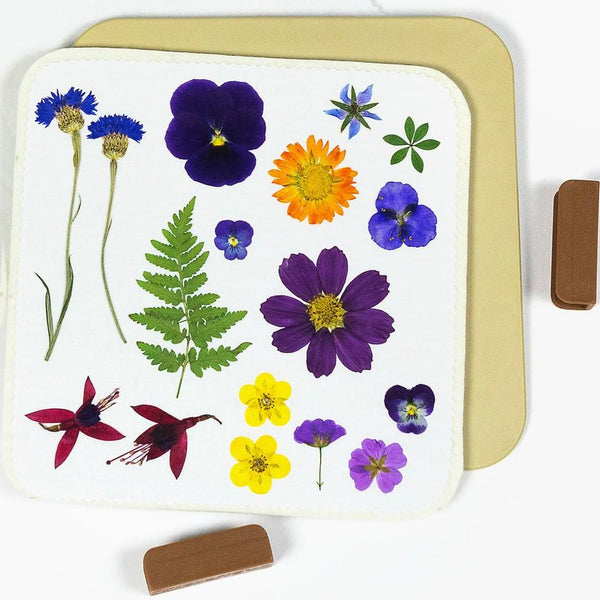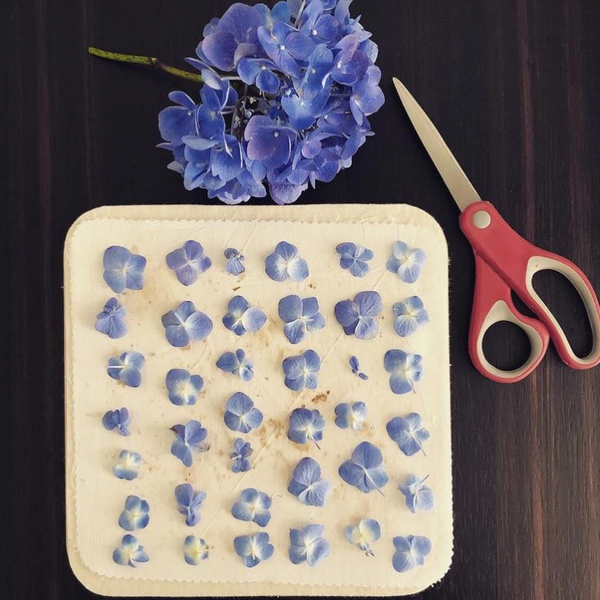

I can slow pressed flower fading - not stop it - by using fully dried blooms, low indirect light, and glazing rated to block about 99% of UV. Even then, visible light can damage petals, and color has no fixed lifespan.
Here’s the care routine I’d follow:
- Before framing: Check that flowers feel papery and rigid, not soft.
- For display: Choose a cool, dry interior wall away from sunlight, steam, and heat. A floating frame isn’t airtight.
- For protection: Use UV-filtering glass or acrylic and acid-free mounting paper where needed.
- For cleaning: Wipe <u>only the exterior</u>. Keep cleaner away from seams.
- For checks: Watch for fading, loose flowers, cracks, and condensation. For lasting moisture or mold, I’d ask a framing professional for help.
The goal is slower color loss, not permanent color.
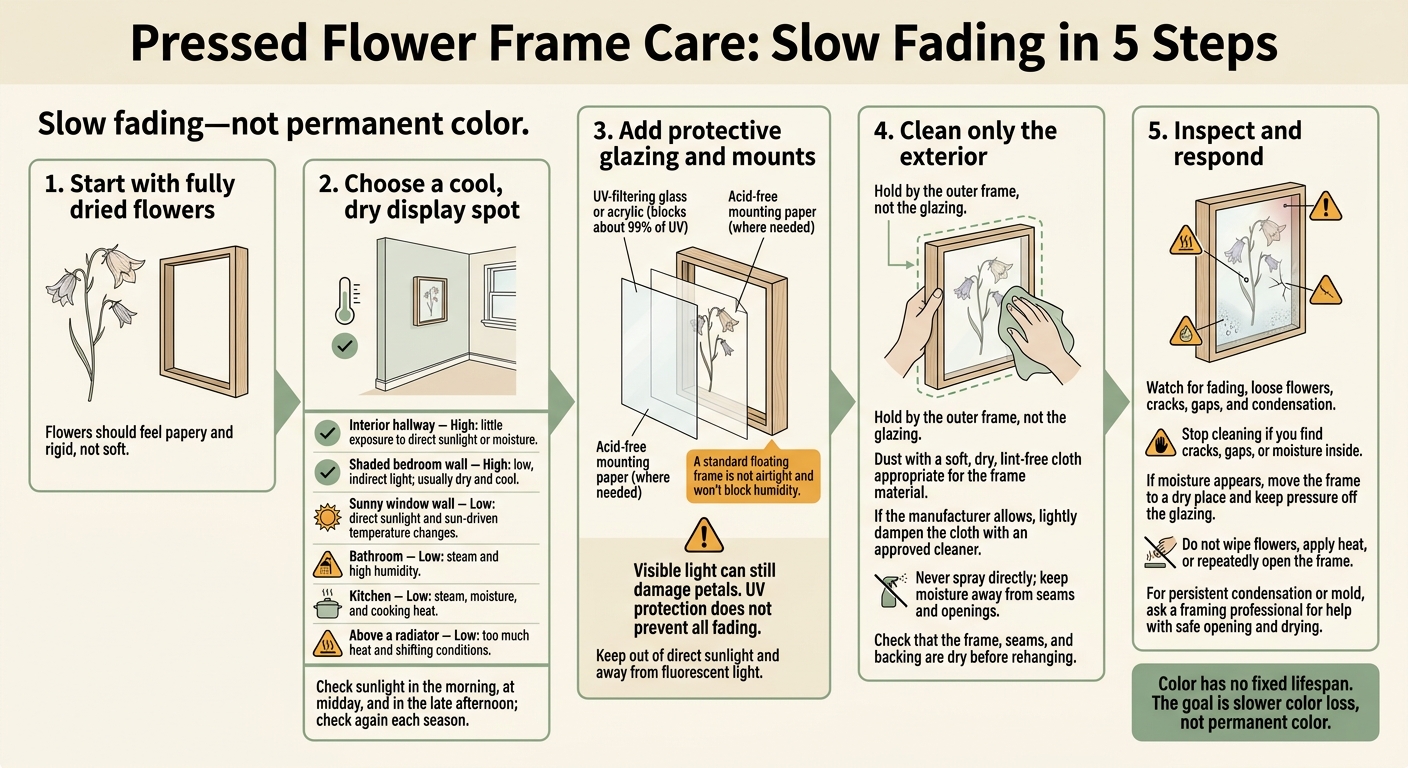
Pressed Flower Frame Care: Slow Fading in 5 Steps
Step 1: Choose a Cool, Dry Display Spot
Pick an interior wall with low, indirect light, away from windows, steam, and damp rooms.
Check the exact hanging spot in the morning, at midday, and in the late afternoon. Look for direct sunlight from windows or skylights, and check again each season as the sun’s angle changes.
Compare Display Locations
| Location | Light and Moisture Risks | Suitability |
|---|---|---|
| Interior hallway | Little exposure to direct sunlight or moisture. | High |
| Shaded bedroom wall | Low, indirect light; usually dry and cool. | High |
| Sunny window wall | Direct sunlight and sun-driven temperature changes. | Low |
| Bathroom | Steam and high humidity. | Low |
| Kitchen | Steam, moisture, and cooking heat. | Low |
| Above a radiator | Too much heat and shifting conditions. | Low |
Once you’ve chosen a spot, use UV-filtering glazing to help slow fading further.
sbb-itb-80d8183
Step 2: Use UV-Filtering Glazing
Once your frame is in a low-light spot, glazing adds another layer of protection against color loss. Choose UV-filtering glass or acrylic rated to block about 99% of UV. This slows fading, but visible light can still damage flowers. Keep the frame out of direct sunlight and away from fluorescent light.
Compare Glazing and Archival Framing
Each option offers a different level of protection:
| Option | What It Does | Limitations | Best For |
|---|---|---|---|
| Standard glazing | Protects against dust and impact only. | Offers the least resistance to light damage. | Short-term projects or dark, climate-controlled displays. |
| UV-filtering glazing | Reduces UV exposure. | Visible light still causes fading. | Routine display of pressed flower framed art. |
| Archival framing assembly | Combines glazing, mounts, and protective construction. | Only protects as well as its weakest component; not fade-proof or airtight. | Long-term preservation. |
For archival framing, check the glazing, mounts, and backing materials rather than relying on the label alone. Choose acid-free paper for mounts to help reduce discoloration.
Keep the glazing intact and the frame closed. A standard floating frame is not airtight, so it won’t block humidity.
Step 3: Clean Only the Frame's Exterior
Once you've chosen the right spot and glazing, clean only the exterior. Hold the piece by the outer frame, not the glazing. Skip interior cleaning, and never let moisture reach the flowers.
Inspect, Dust, and Spot-Clean
Remove dust and surface haze without letting in dampness that could discolor the flowers.
- Check for cracks or condensation: Stop if you find cracks, gaps, or moisture inside. These signs may mean the frame’s protection is compromised.
- Dust the exterior: Wipe the glazing and frame with a soft, dry, lint-free cloth. Choose the cloth recommended for your frame material.
- Spot-clean only the outside: If the manufacturer allows it, lightly dampen the cloth with an approved cleaner. Never spray cleaner directly onto the frame or glazing, and keep moisture away from seams and openings.
Before rehanging, check that the frame, seams, and backing are dry.
Conclusion: Keep a Simple Care Routine
Keep care simple: use fully dried flowers, low indirect light, UV-filtering glazing, and exterior-only cleaning. UV protection slows fading, but it doesn’t guarantee permanent color. Inspect the frame regularly for moisture or damage.
Check for Moisture, Loose Flowers, and Damage
Look for fading, condensation, loose flowers, and damage. If you spot moisture, move the frame to a dry place and keep pressure off the glazing. Don’t wipe the flowers, apply heat, or open the frame repeatedly. If condensation persists or mold appears, ask a framing professional to help with safe opening and drying.
FAQs
Which flowers hold their color best after pressing?
Flowers with strong natural pigments - like red roses, yellow daffodils, blue delphiniums, and lobelia - usually hold their color best. With proper drying and storage, their color can last for years. Paler flowers and older blooms, on the other hand, may fade within months.
Choose newly picked flowers and dry them thoroughly to prevent moisture-related discoloration. Then keep them away from light and humidity. How well the color lasts depends on the flower variety and how recently the blooms were picked.
Can LED lighting fade my pressed flowers?
Yes, LED lighting can cause pressed flowers to fade over time. Sunlight is the main source of damaging UV rays, but visible light - including light from LED bulbs - also slowly breaks down flower pigments.
Display your art on interior walls away from direct sunlight, and limit strong artificial lighting. UV-filtering glass or acrylic can help protect the flowers, but it won’t stop all light-related fading. Where you display them still matters.
How can I tell fading from moisture damage?
Fading is a gradual loss of color intensity, especially in bright reds, blues, purples, or pale blooms. Moisture damage often appears as condensation inside the frame, mold, or stained petals.
Puckered, brown, or curled petals often mean the flowers weren’t fully dried before framing. Check periodically for these changes to spot problems with storage or display conditions early.