










Pressed flowers can lose color fast if you frame them with plain glass and hang them in the sun. If I want them to last longer, I need to use UV-blocking glazing, acid-free backing, a spacer, and keep the frame in a low-light, dry room.
Here’s the short answer:
- Plain frame glass only blocks about 25% to 45% of UV light
- UV-filtering glass or acrylic blocks about 97% to 99%
- Conservation glass blocks about 99%
- Direct sunlight, heat, and trapped moisture do the most damage
- Bright reds, blues, purples, and pale blooms tend to fade sooner
- Wedding flowers, memorial pieces, and heirloom keepsakes need the most care
If I’m framing pressed flowers, I’d treat UV protection as the first step, not the last. The goal is simple: slow fading, yellowing, brittleness, dust, and moisture damage before they start.
Quick Comparison
| Glazing type | UV blocking | Weight | Break risk | Scratch resistance | Best use |
|---|---|---|---|---|---|
| Ordinary glass | 25%–45% | Heavy | High | High | Short-term use only |
| UV-filtering glass | 97%+ | Heavy | High | High | Most indoor wall frames |
| Conservation glass | 99% | Heavy | High | High | Keepsakes and heirloom pieces |
| UV-filtering acrylic | 98%–99% | Light | Low | Lower | Large frames, shipping, busy areas |
A good pressed flower frame is more than the front glazing. I also want flowers that are fully dry, a pH-neutral adhesive, acid-free materials, space between the flowers and glazing, a rigid backing board, using a framed pressed flowers kit, careful cleaning, and checks every few months.
That’s the whole system in plain terms: block UV, avoid moisture, reduce contact, and keep light low.
sbb-itb-80d8183
Choose UV-Protective Glazing
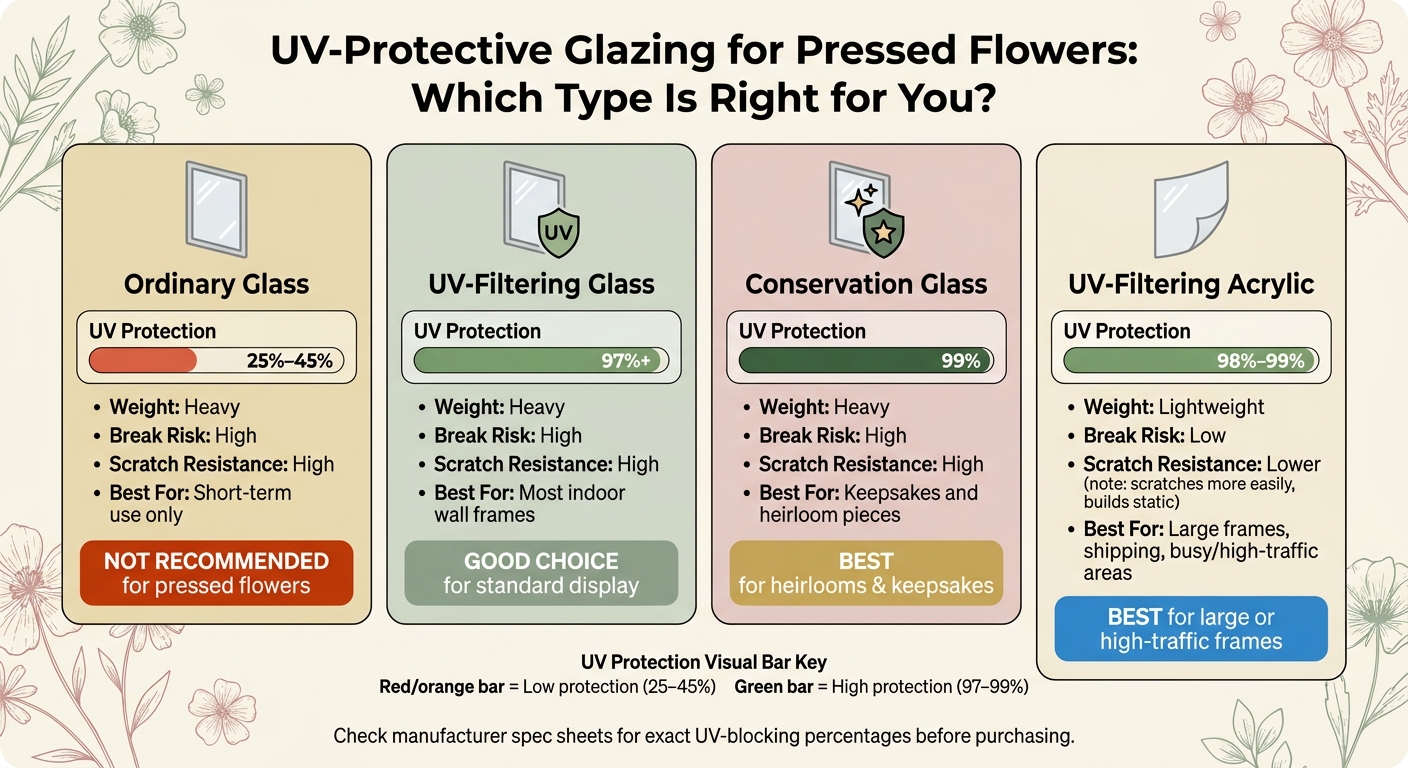
UV-Protective Glazing for Pressed Flowers: Which Type Is Right for You?
Choose glazing with care. It’s the frame’s first line of defense against UV light.
Ordinary clear glass blocks only about 25% to 45% of UV light. For botanical art, that usually isn’t enough. As Michelle Besu of Wild Coast Flower Preservation notes, flat petals fade faster without UV-protective glazing.
Before you buy, check the manufacturer’s spec sheet for the exact UV-blocking percentage. Conservation-grade glazing blocks about 99% of UV light, while UV-filtering glass and acrylic usually block 97% to 99%.
Use the comparison below to match the glazing to your frame size, where it will hang, and how much handling it may need.
Glass vs. Acrylic: A Side-by-Side Comparison
| Feature | Ordinary Glass | UV-Filtering Glass | Conservation Glass | UV-Filtering Acrylic |
|---|---|---|---|---|
| UV Protection | Low (approx. 25–45%) | High (97%+) | Highest (99%) | High (98–99%) |
| Weight | Heavy | Heavy | Heavy | Lightweight |
| Break Resistance | Low | Low | Low | High |
| Scratch Resistance | High | High | High | Low |
| Suitability for Pressed Flower Art | Not recommended | Acceptable for stable indoor display | Best for heirloom pieces | Best for large or high-traffic frames |
How to Pick the Right Glazing for Your Frame
For a standard frame on an indoor wall, UV-filtering glass is a practical pick. It gives you high clarity and better scratch resistance. If you’re framing a keepsake or something you want to protect for years, conservation glass is a strong step up.
UV-filtering acrylic makes more sense when the frame is large, needs to be shipped, or will hang in a spot where break resistance matters more, like a child’s room or a busy hallway. It’s much lighter and shatter-resistant.
There is a trade-off, though. Acrylic scratches more easily, and it builds static. That static can pull in dust and make it harder to handle small flower fragments.
Once you’ve chosen the glazing, the next step is building the frame with safe backing, spacing, and mounting.
Build a Frame That Protects the Flowers
Glazing is just the first layer. The rest of the frame matters too: acid-free backing, safe adhesives, spacers, and firm support all help protect the flowers inside.
Start with Properly Dried Flowers
Flowers need to be fully dry before you frame them. If moisture gets trapped inside, it can lead to condensation, mold, and staining.
If you want to speed things up, a microwave flower press like Microfleur can help dry flowers faster and hold onto more of their color.
Use Acid-Free Backing and Safe Mounting Methods
Use acid-free matboard or backing paper to cut down on yellowing and breakdown over time.
For mounting, a neutral pH archival adhesive works for most petals. For heavier pieces, use a thicker gel adhesive instead. Apply only a small amount to the back of each flower, then place each piece with tweezers so you don't transfer oils from your fingers or scuff the surface.
Add a Spacer and a Rigid Backing Board
Flowers shouldn't sit right against the glazing. Add a spacer or use a double mat to help prevent abrasion, condensation, mold, and staining. A double white mat can also give the arrangement a bit more breathing room, so it doesn't feel squeezed into the frame.
Double-sided glass is best saved for very thin botanicals. Thicker pieces can make the frame hard to close or put stress on the glass.
After the spacer is in place, close the frame with a rigid backing board. That helps reduce flexing and can limit dust from getting in over time.
With the frame built, display location becomes the next layer of protection.
Display, Clean, and Monitor the Frame
Choose a Low-Light, Stable Location
Once the frame is sealed, where you put it matters just as much as how you built it. Keep it out of direct sunlight and away from windows, air vents, and humid rooms. Conservation studios rely on stable, temperature-controlled rooms to slow fading. The same idea applies at home: a low-light room with steady conditions helps the flowers keep their color longer.
Clean Only the Outside of the Glazing
When it needs cleaning, stick to the outside of the glazing only. Use a microfiber cloth and a cleaner that’s safe for both glass and acrylic. Spray the cleaner onto the cloth, not onto the frame, and hold the frame by the edges while you clean to avoid fingerprints and skin oils.
Check the Frame Every Few Months and Store Extras in the Dark
A quick check every few months can help you spot small issues before they turn into lasting damage. Look for fading, yellowing, loose petals, or signs that the flowers or mount may have shifted. Catching those changes early can help prevent permanent damage.
If you have extra dried flowers, store them in a cool, dry, dark place, like a drawer or box, until you’re ready to use them. Try not to handle them much. Proper preparation for pressing also ensures they remain sturdy once dried. Dried flowers are fragile and can break with very little pressure.
Conclusion: A UV Protection Checklist for Keepsake Flower Art
How you dry, glaze, mount, and display pressed flowers all plays a part in how long their color lasts. UV-protective glazing, acid-free materials, and steady display conditions can slow fading, but they can't stop it. The right setup buys you more time - not forever.
Before you seal the frame or hang it on the wall, run through this checklist:
| Step | What to Do |
|---|---|
| Drying | Fully dry flowers before framing |
| Glazing | Use UV-protective glass or acrylic to help block damaging light |
| Spacing | Add a mat or spacer so flowers don't press against the glazing |
| Backing | Mount on acid-free paper with a pH-neutral adhesive |
| Rigid support | Use a rigid backing board |
| Placement | Display in a low-light, dry, stable room away from direct sunlight |
| Cleaning | Wipe only the outside of the glazing with a microfiber cloth |
| Inspection | Check every few months for fading, shifting, or moisture damage |
FAQs
How long will pressed flowers keep their color in a frame?
When you preserve and frame them the right way, pressed flowers can hold onto their color and beauty for decades. That said, they’re still natural materials, so light can slowly make them fade over time.
To help them last longer, use UV-protective glass or acrylic. You can also add a clear acrylic sealer for extra protection against UV rays and moisture.
Can I reframe pressed flowers if they were mounted with regular materials?
Yes, but be VERY careful. Dried flowers are fragile, and it doesn’t take much to damage them during reframing.
Before you move anything, check for brittleness or signs that the material is starting to break down. If you decide to reframe them, use archival, acid-free materials, handle the flowers as gently as possible, and think about adding UV-protective glazing to help limit future fading and light damage.
What’s the safest room in my home for framed pressed flowers?
A temperature-controlled room is the safest spot for framed pressed flowers. Skip areas with shifting temperatures or high humidity, because those conditions can speed up fading and lead to damage.
For long-term preservation, keep them in a stable indoor space and use a frame with UV-protective glass to help limit light damage.





















