










If I want the best color from thick petals, I’d pick microwave pressing first. For flowers like roses, lilies, tulips, sunflowers, and zinnias, drying in about 1–4 minutes usually beats waiting 3–7 days or even weeks with air pressing.
Here’s the short version:
- Microwave pressing dries thick petals much faster
- Air pressing gives moisture more time to sit in the center
- Thick blooms often turn brown, blotchy, or wrinkled when they dry too slowly
- Short microwave rounds of 20–30 seconds help cut scorch risk
- Dense flowers often need to be split, trimmed, or flattened first
- If heat is a problem for a flower, air pressing may still make more sense
What matters most in this comparison is simple:
- Drying time
- Color hold
- Browning risk
- Center moisture
- Final shape and texture
- How closely I need to watch the process
Bottom line: if color is the goal, microwave pressing usually wins for thick petals because it dries the bloom before fading and browning set in. Air pressing is gentler, but with moisture-heavy flowers, that slower pace often leads to a weaker result.
How to Press Flowers in Minutes (Microwavable Flower Press Tutorial - Microfleur)
sbb-itb-80d8183
Quick Comparison
| Factor | Microwave Pressing | Air Pressing |
|---|---|---|
| Drying time | 1–4 minutes | 3–7 days to several weeks |
| Color hold | Better in thick petals | Often fades or browns |
| Browning risk | From too much heat if overdone | From slow drying, trapped moisture, or mold |
| Thick centers | Dry more evenly | Often stay damp longer |
| Final look | Flatter and stiffer | More wrinkling and uneven spots |
| Monitoring | Close checks during short rounds | Lighter daily effort, but longer risk window |
| Best use | Moisture-rich, dense blooms | Flowers that don’t handle heat well |
So if you’re pressing thick petals, I’d treat this as a tradeoff: speed and color with microwave pressing, or less heat but more drying risk with air pressing.
Microwave Pressing: Faster Drying and Stronger Color Potential
How Microwave Pressing Works on Thick Petals
Microwave pressing uses heat to push moisture out of the flower, while wool felt pads and cotton liners soak it up. The press stays under firm pressure, and vented press plates give steam a way out as the bloom flattens.
One big draw is speed. Microwave pressing can cut drying time from several weeks to about 1–4 minutes. That quick turnaround can help limit pigment loss before thick petals start to brown.
There is a catch, though. Fast drying tends to hold color best when you keep the microwave cycles short and under close control.
How to Press Thick Petals in Short, Controlled Cycles
Start with flowers that are fresh and dry to the touch, with no dew or rain on them. Set the petals between the absorbent layers, then microwave them in short bursts of 20–30 seconds. Open the press between cycles so trapped steam can escape.
Don’t stop just because the timer did. Stop when the petals feel dry and papery. If they still feel cool or damp, run another short cycle.
With bulky blooms like roses or tulips, it helps to cut the flower in half or press it in profile. That reduces bulk and makes the center easier to dry.
Common Microwave Pressing Mistakes With Thick Blooms
The most common mistakes are simple: running the cycles too long, starting with blooms that are already damp, and pulling the flower out before the center has dried fully. Microwave pressing is fast, but that speed asks for tighter heat control, which is where air pressing works very differently.
When a Microfleur Press Fits This Method
Size plays a big role here because thicker blooms need enough surface area for even pressure and moisture removal. Microfleur sells microwave flower press kits in Regular and Max sizes. The Regular press works for smaller flowers. The Max is a better fit for larger blooms like roses and lilies, or for pressing several flowers at the same time.
Air Pressing: No Direct Heat, but Slower Moisture Release
Compared with microwave pressing, air pressing is slower and gentler. It dries flowers at room temperature between absorbent paper under steady weight. That slower pace matters: thick petals usually need at least 3 to 7 days, and often several weeks.
How Air Pressing Works on Thick Petals
Air pressing draws moisture out little by little. That works better for thin petals than thick ones. With dense blooms, the outer edges often dry first while the center stays damp long after the outer petals look done.
That slow release is the main problem with thick petals. The longer moisture sits inside the flower, the more time pigments have to break down and the more likely the petals are to turn brown. Thick-petaled flowers like roses and sunflowers are hit hard by this because their centers hold moisture for so long.
Where Air Pressing Helps and Where It Falls Short
Dense blooms tend to dry better if you thin or split them first. But with thick petals, there’s a tradeoff. If the bloom keeps too much moisture, the risk of mold, browning, and uneven results goes up.
Instead of drying flat and bright, thick petals that resist flattening often end up:
- wrinkled
- blotchy
- uneven in color
How to Reduce Moisture Problems During Air Pressing
You can improve the odds by preparing flowers for pressing. Split roses or tulips, remove hidden inner petals, and flatten trumpet-shaped flowers so moisture can escape faster. It also helps to swap out damp paper often, since wet paper stops pulling moisture well and can encourage mold.
Those limits stand out even more in the side-by-side comparison below.
Microwave vs Air Pressing: A Direct Comparison for Thick Petals
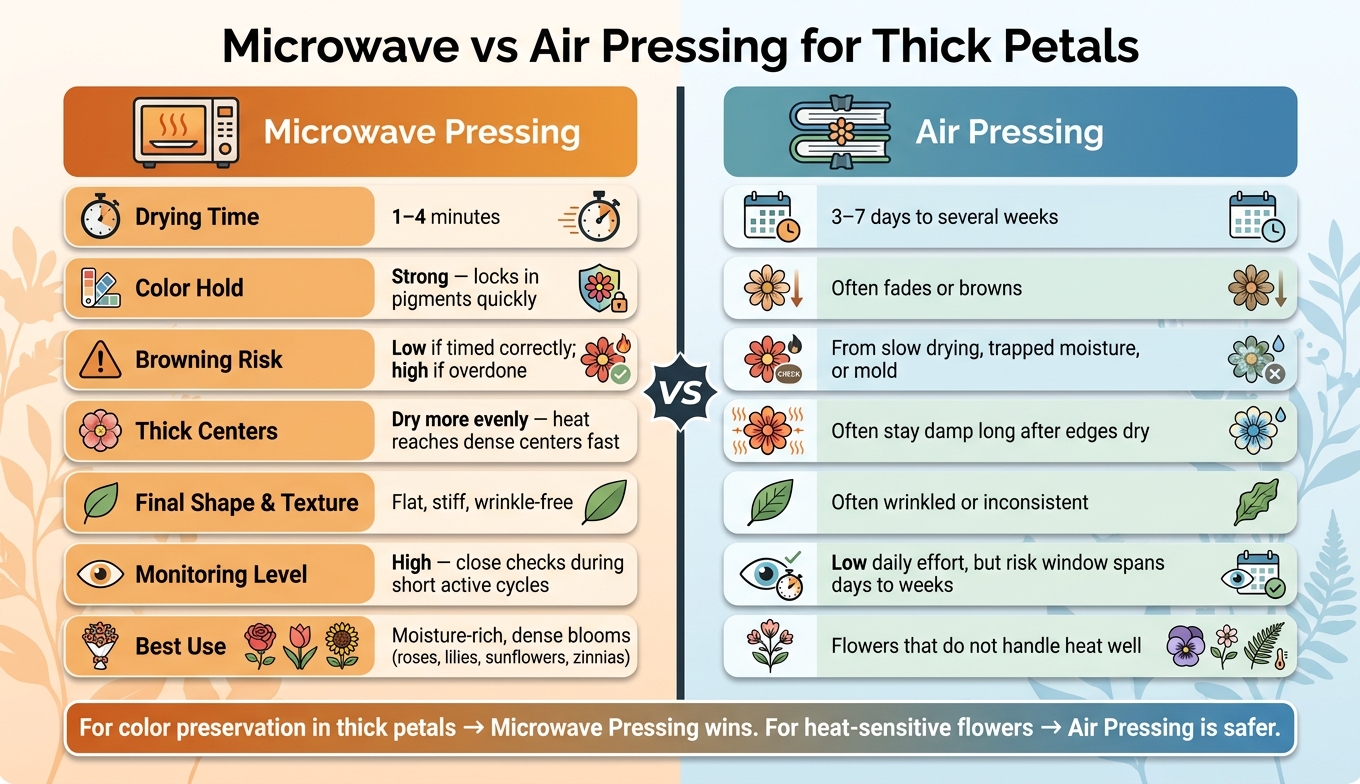
Microwave vs Air Pressing for Thick Petals: Side-by-Side Comparison
Comparison Table: Microwave Pressing vs Air Pressing for Thick Petals
For thick petals, the main tradeoff is simple: speed, color hold, and how much moisture stays trapped in the center.
| Factor | Microwave Pressing | Air Pressing |
|---|---|---|
| Drying Time | Minutes (roughly 1–4 minutes total) | 3 to 7 days to several weeks |
| Color Hold | Strong; locks in pigments quickly | Often fades to dull or brownish tones |
| Heat-Related Browning Risk | Low if timed correctly; high if cycles run too long | No direct heat browning; risk comes from slow drying and mold |
| Uneven Drying in Thick Centers | Low; heat reaches dense centers fast | High; centers stay damp long after edges dry |
| Final Shape and Texture | Flat, stiff, wrinkle-free | Often wrinkled or inconsistent |
| Monitoring Level | High during short active cycles | Low day-to-day, but needs periodic checks over weeks |
| Suitability for Moisture-Rich Petals | Strong when tightly controlled; best for dense blooms that dry slowly | Poor; prone to rot and pigment loss |
Color Hold and Pigment Preservation
Microwave pressing tends to keep more color in thick petals because the flower dries before the pigments start to break down. With air pressing, the process takes much longer, which gives fading and browning more time to set in.
Fast moisture loss helps protect pigment in thick petals, but timing matters. If the heat runs too long, browning can come from too much heat, not trapped moisture. As Microfleur puts it, "the most common reason for burned flowers, pads and liners is a pressing time that is too long." That’s why short bursts of 20 to 30 seconds are the safer way to go.
How Each Method Affects the Final Look of Thick Blooms
Microwave-pressed flowers usually come out flat, stiff, and even. That’s a big deal with thick blooms, where the center can be harder to dry than the edges. Air pressing often gives you a less even result, with wrinkled edges or centers that stay raised.
"The plant material comes out completely flat, stiff and wrinkle free and the rapid drying keeps the color of flowers so vibrant."
Which Method Needs More Monitoring
Microwave pressing asks for more attention up front. You need short cycles and active checks while the flower dries. Air pressing is more hands-off from day to day, but that can be misleading. Thick centers may stay damp for a long time, which opens the door to mold or browning over days or weeks.
Once those problems show up, the bloom usually can’t be saved. For thick-petaled flowers, that gap in monitoring style often ends up being the deciding factor.
When to Choose Microwave Pressing for Thick Petals
Best Cases for Microwave Pressing
Microwave pressing works best when speed and color matter more than a hands-off method. It’s a smart pick for blooms with lots of moisture, especially when slow drying can lead to browning. By pulling out moisture fast, this method helps hold onto pigment before discoloration sets in.
It also makes sense when you need flowers ready fast.
That said, this method only works well if you can watch each short cycle closely. A few extra seconds can make the difference between a well-pressed bloom and a scorched one.
When Microwave Pressing May Not Be the Right Fit
Microwave pressing isn’t the best match for every flower. Skip it for blooms that scorch easily.
Bulky, layered flowers can also be tricky. They often need to be split or flattened first so they dry evenly.
And if you can’t stay nearby to monitor short cycles, this method isn’t a good choice.
When a bloom doesn’t handle heat well or needs a slower drying process, air pressing is the better fit.
When to Choose Air Pressing for Thick Petals
Best Cases for Air Pressing
Air pressing makes sense when heat is more likely to harm the bloom than slow drying. If that’s the tradeoff you’re dealing with, this method is usually the safer pick. It also works well when you want a softer, matte finish instead of a flatter, more crisp look.
With layered blooms, follow some flower pressing tips for beginners to prep the blooms first. Remove hidden inner petals before pressing. That helps cut down trapped moisture and lowers the risk of mold before drying is done. It also gives you a better shot at getting the center to dry evenly.
You’ll still need to keep an eye on the flower as it dries. Check for damp centers and swap out damp paper on a regular basis. Air pressing starts to fall apart when the bloom holds too much moisture in the middle.
When Air Pressing Is Likely to Cause Problems
The biggest issue with air pressing isn’t heat. It’s time.
This method has the most trouble with dense, moisture-heavy blooms. Because drying takes longer, pigments have more time to fade. So thick petals often lose color before the flower is fully dry.
If keeping pigment is the main goal, air pressing usually isn’t the right fit for thick-petaled flowers like roses, tulips, and lilies.
Conclusion: Which Method Is Better for Pigment Preservation in Thick Petals
Bottom line: microwave pressing does a better job of preserving pigment in thick petals because it dries flowers much faster. Air pressing is gentler, but that slower drying window gives browning and fading more time to set in. Microwave pressing also handles browning control and final shape better. Thick petals tend to dry flatter and more evenly, with less chance of wrinkled edges or damp centers that hang around for days. Use even pressure, and don't stop until the center is fully dry.
If you're pressing roses, lilies, or sunflowers and color is a big deal, microwave pressing is the safer bet. Air pressing makes more sense only when heat is a concern and time isn't an issue.
Quick Takeaway for U.S. Crafters
Choose microwave pressing when you want the best shot at keeping color in thick petals, especially with roses, sunflowers, and zinnias. Use short 20–30 second cycles, check the center between rounds, and stop only when the bloom feels stiff and fully dry.
Choose air pressing when heat is a concern and time isn't a problem. Just know that with thick petals, you're giving up speed and color for a gentler drying method.
FAQs
How do I know when thick petals are fully dry?
Thick petals are dry when they look flat and feel dry to the touch.
Microwave power can vary a lot, so use short bursts of 25 to 30 seconds. Let the petals rest briefly between each burst, then check them again. If you’re working with very thick, layered flowers, you can remove extra petals that won’t show once the flower is flattened.
Which thick flowers need trimming before pressing?
Flowers with lots of petal layers need a little prep before you press them. Thin them out first by removing petals that won’t show once the flower is flattened. Then press those petals on their own.
This helps the flower dry more evenly and usually leads to better results with thick, multi-layered blooms.
What causes thick petals to turn brown when pressing?
Thick petals often turn brown because they dry at a slow pace. That gives their natural pigments more time to break down. Old-school pressing methods, like tucking flowers inside books, can take weeks, so discoloration is more likely.
Too much heat can also make petals brown by scorching them. A simple fix is to remove extra layers from very full flowers and press those petals on their own.





















