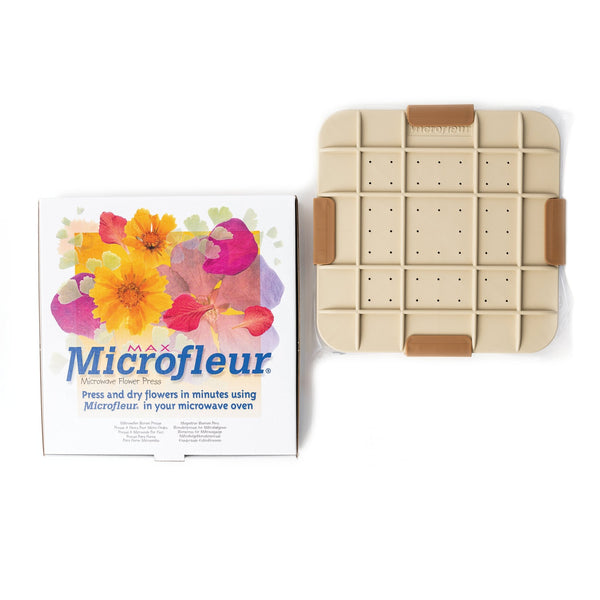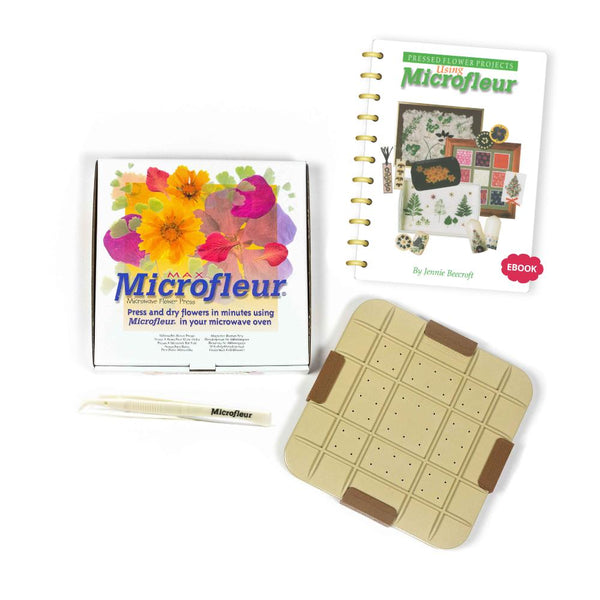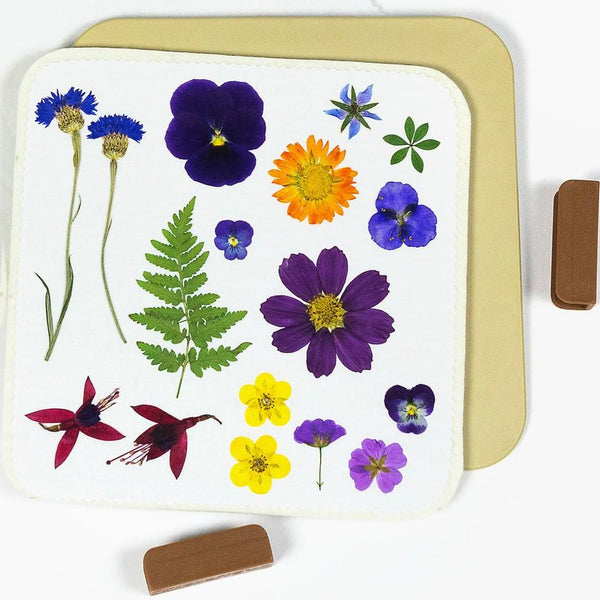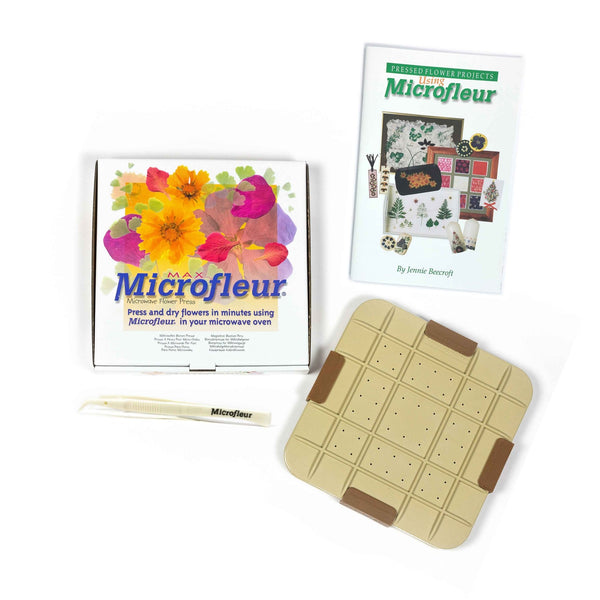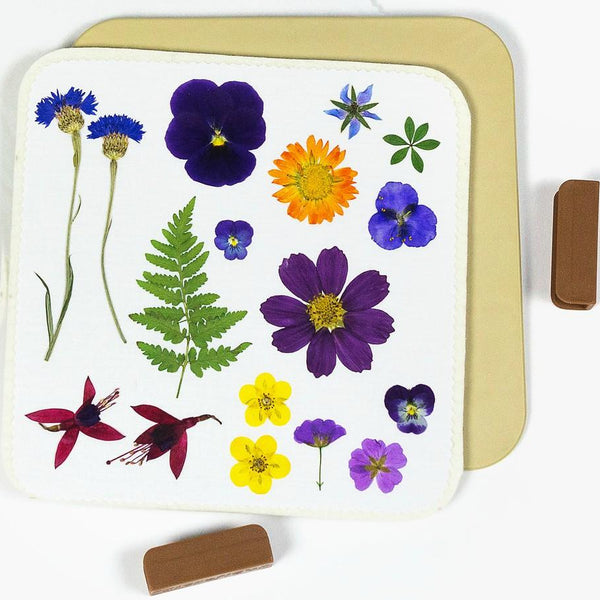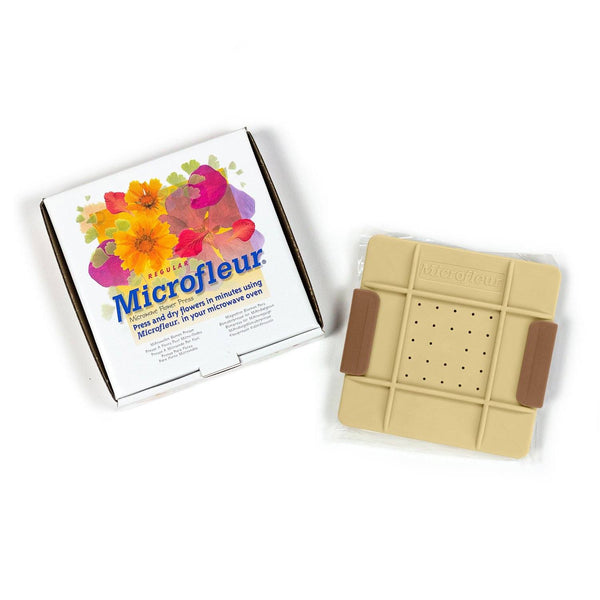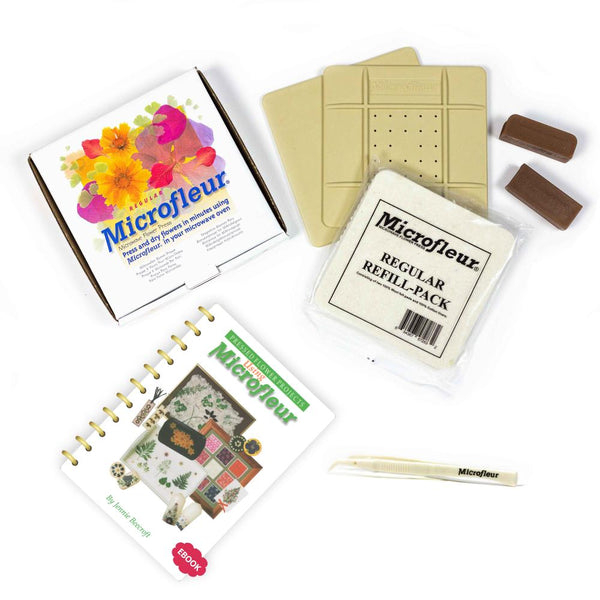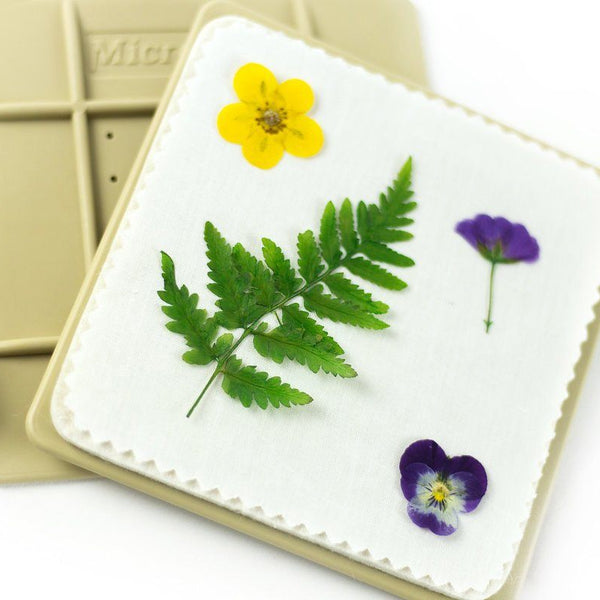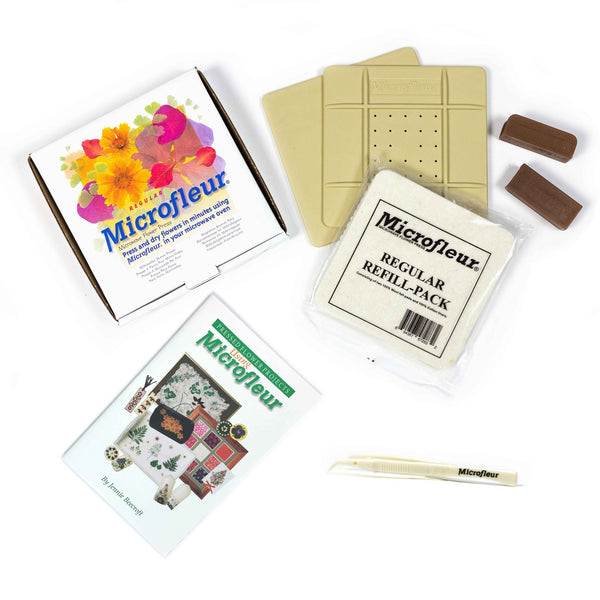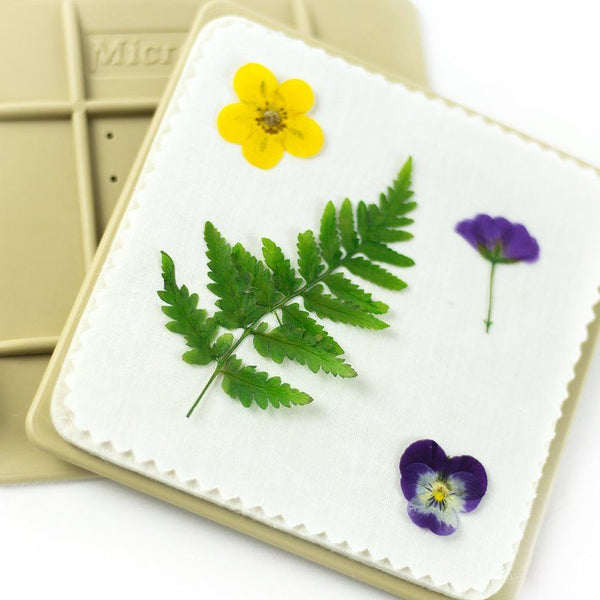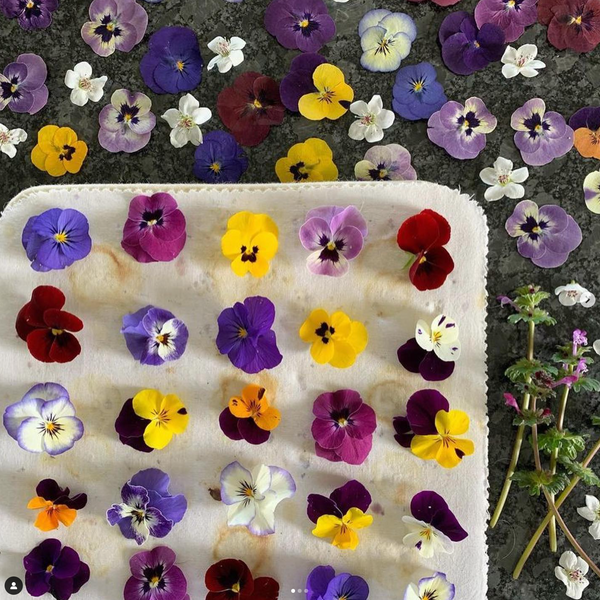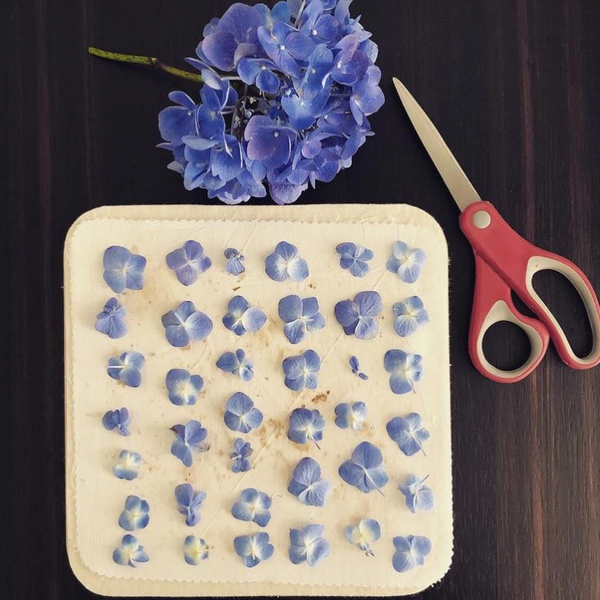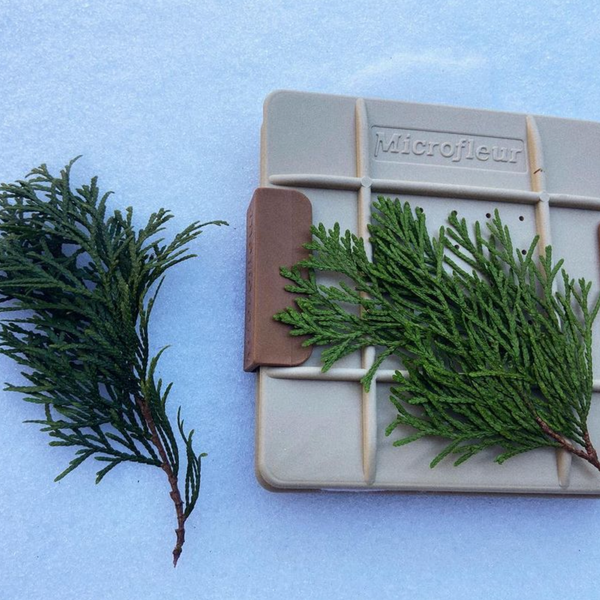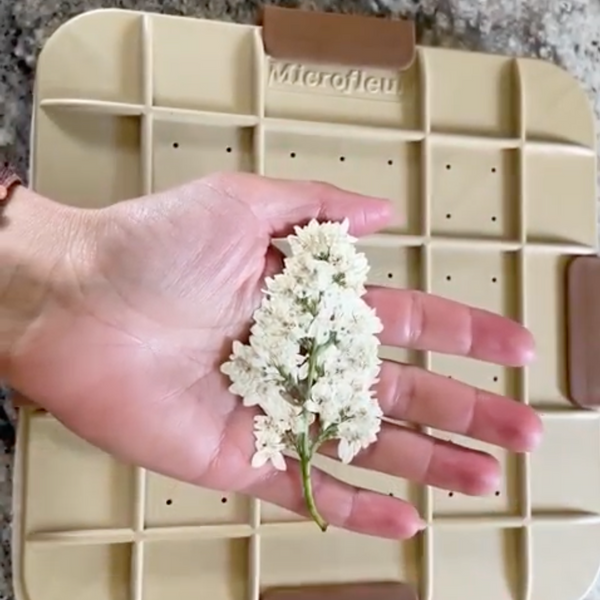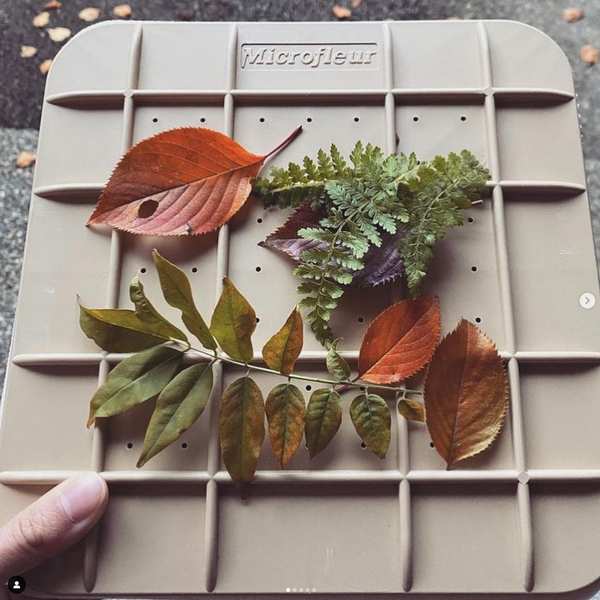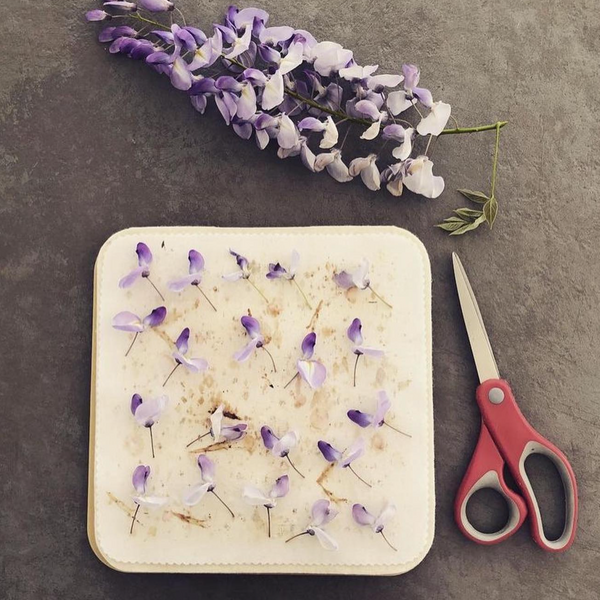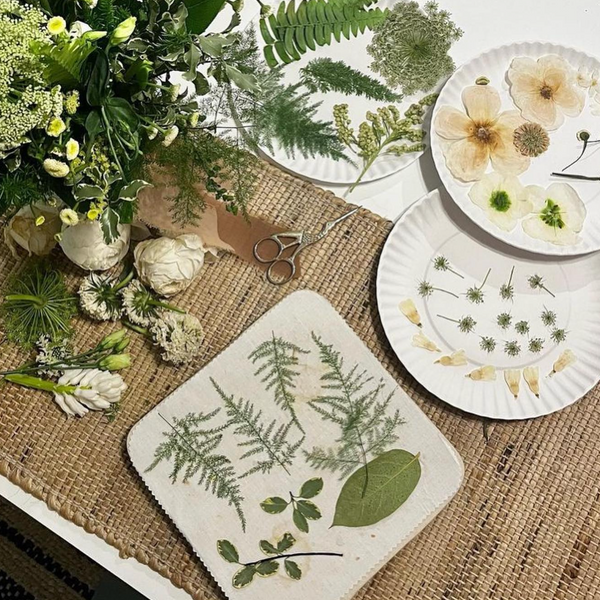






A Microfleur costs more than most microwave flower presses on Amazon. The difference you're paying for is mostly the build: a Microfleur's plates are rigid, so the flowers get even pressure across the whole press, plus pads made to last hundreds of uses, replacement parts, a one-year warranty, and free lessons. If you only want to press a few flat flowers for one project, a cheaper press may be all you need. If you'll press often, or you're pressing flowers you can't replace, the build is worth it.
How does Microfleur compare with a cheaper microwave press?
| Microfleur Max (9") | Typical cheaper microwave press | |
|---|---|---|
| Price | $69.99 (Regular 5": $39.99) | About $17 to $39 on Amazon (October 2026) |
| Sizes | 5" x 5" (25 square inches of pressing space) and 9" x 9" (81 square inches) | Many, from about 5" to 10", square or round |
| Build | Rigid plates that don't bend under the clips | Varies by brand |
| Pads | Made to last hundreds of uses; replacement packs sold | Varies; check whether refills exist |
| Warranty | 1 year against defects | Varies; check the listing |
| Learning help | Free Mastery course, plus flower-by-flower courses | Usually the instructions in the box |
| Customer service | Our own team, based in the USA | Varies by seller |
| Track record | 25+ years making flower presses | Varies |

Why does the build of a microwave press matter?
A flower press has two jobs: flatten the flower and get the moisture out fast. Both depend on even pressure.
When the plates of a press flex, the clips squeeze the edges harder than the middle. Flowers near the center get less pressure, and petals that aren't held flat can ripple or wrinkle as they dry. Even pressure across the whole plate is what gives you flat, smooth petals from edge to center.
This is the difference we hear about most, and you can feel it in your hands: a Microfleur is stronger, it doesn't bend, and it presses evenly across the whole surface.
We've tried one of the cheaper presses ourselves. Its plastic parts were light and thin, and the pads felt cheaper too. That's one press, not every brand, so if you're comparing, pick up both and feel the difference for yourself: how stiff the plates are, and how solid the pads feel.
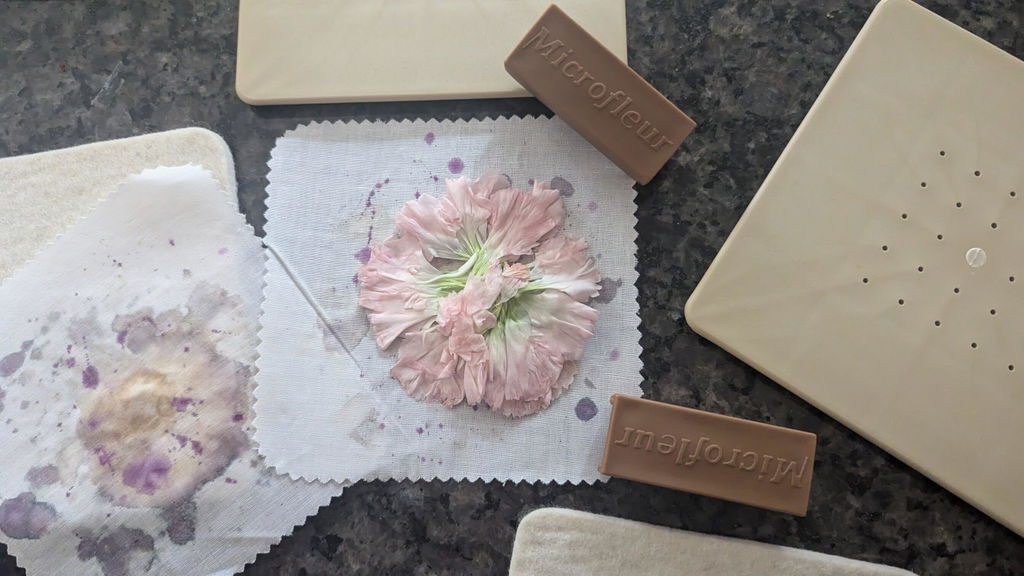
Look closely at the plates, too. Some presses have large holes in their plates, and those can leave uneven pressing marks on the flowers. The surface that touches your flowers matters as much as how stiff it is.
One honest note: even a Microfleur shouldn't be overloaded. If you have to force the clips on, take a flower or two out. Overfilling can bend any press, ours included.
Why do pads and replacement parts matter?
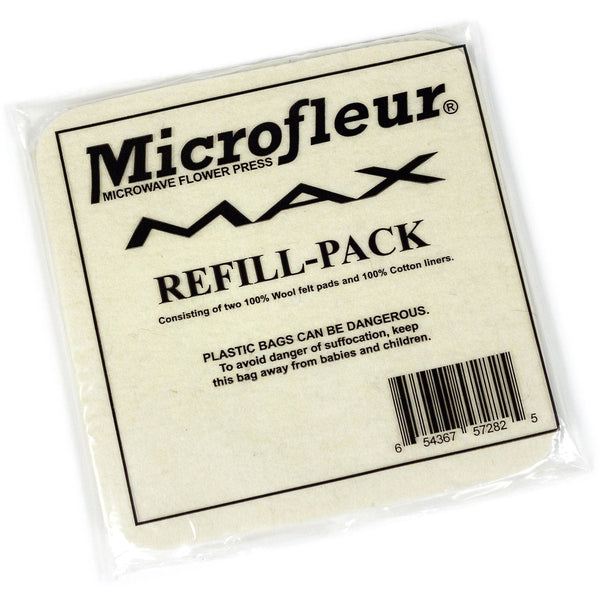
The pads soak up the moisture coming out of the flower, and they work hard. Every microwave press has pads that eventually wear out, whatever the brand. Ours last for hundreds of pressing cycles, and when they finally wear out you can buy a replacement pack instead of a whole new press. Our cotton liners can be washed and ironed.
We can't tell you how long the pads in cheaper presses last, because we haven't tested them over hundreds of uses. It's worth asking before you buy. If a cheaper press's pads need replacing often, the cheaper press isn't really cheaper.
Use the pads made for your press. Our user manual warns that non-genuine pads could lead to excessive temperatures, and the same common sense applies to any microwave press: if a kit doesn't sell its own refills, plan on replacing the whole press when the pads give out.
When is a cheaper microwave press the right choice?
A cheaper press is a perfectly reasonable choice if:
- You want to try microwave pressing once before committing to it.
- It's for a single project, like a few flowers for a card or a scrapbook page.
- It's for a child's craft afternoon, where perfect results don't matter.
If that's you, a cheaper press will teach you whether you enjoy the craft. Many people start that way.
When is a Microfleur worth paying more for?
A Microfleur makes the most sense if:
- You'll press regularly, so the pads, the warranty, and the build all pay off over time.
- You're pressing flowers you can't replace, like a wedding bouquet or flowers from a funeral. You get one chance, so even pressure matters most here.
- You want to press larger or thicker flowers. The 9" Max fits big blooms like roses, and with practice, more advanced flowers like lilies.
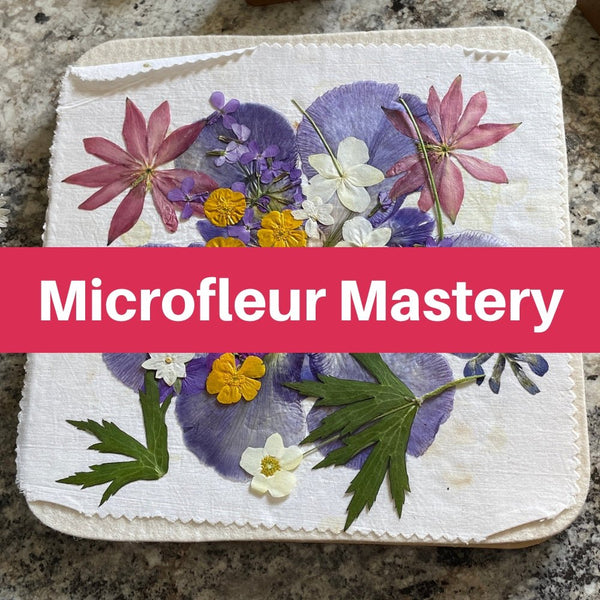
- You want to learn properly. The free and flower-by-flower courses take the guesswork out of timing.
- You'd like a real person to ask when something goes wrong. Our customer service is our own team, here in the USA.
Where does a cheaper press have the edge?
It's fair to name the trade-offs:
-
Price. A Microfleur Max costs about $30 to $40 more than most cheaper 9" presses. If budget is the only deciding factor, that matters.
-
Size choice. Microfleur comes in two sizes, 5" and 9" square. Cheaper presses come in more sizes and shapes, including round ones up to about 10". If you need an in-between size, you may find it elsewhere.
Compare the pressing surface, not just the number on the box. The Max's square 9" plate gives you 81 square inches of pressing space. A round press loses the corners, so a 10" round press works out to about 78.5 square inches: a bigger number on the label, but less room for flowers.
Microwave flower pressing takes practice, whichever brand you choose, because every flower and every microwave is different. Our has starting times for every common microwave wattage.
Regular or Max: which Microfleur should you get?
The Regular (5" x 5", 25 square inches of pressing space, $39.99) suits small flowers, leaves, and beginners who want to start small. The Max (9" x 9", 81 square inches, $69.99) has more than three times the room. It fits big blooms, or several flowers at once, and is the better fit if you plan to press often. Both come with two plates, pads, cotton liners, and clips.